-
- EN
-
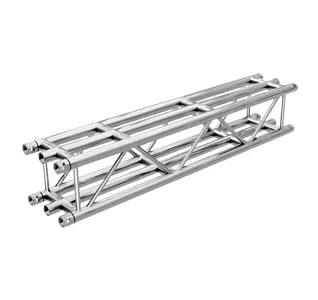
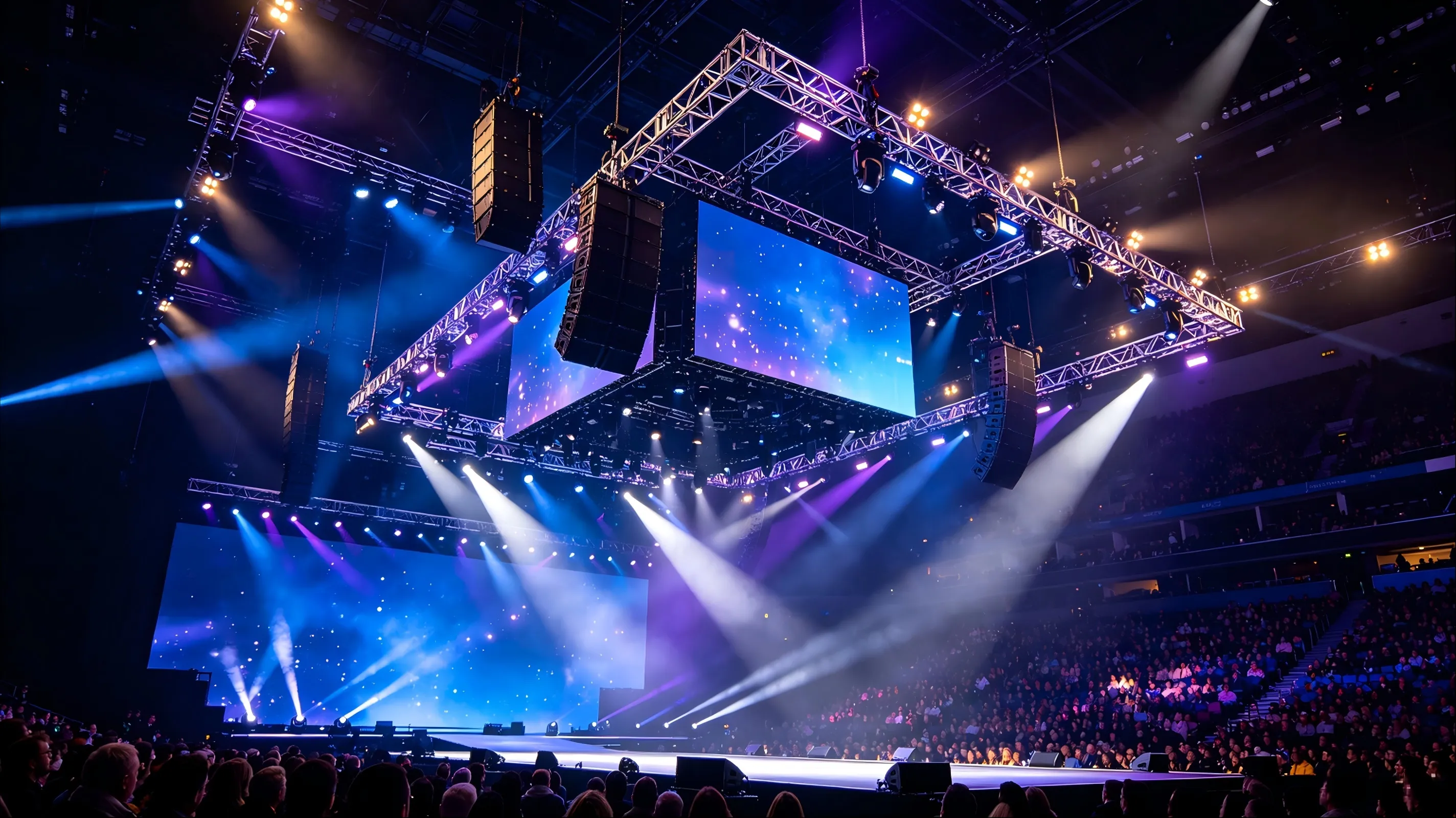
Audiences look toward the stage and see dazzling lights and giant LED screens. But for industry professionals, the rows of truss suspended above the crowd are the most fundamental safety foundation of the entire show. For aluminum truss of the same specification, market prices vary widely — from a few hundred to over a thousand yuan per meter. One of the core reasons behind this price difference is whether the product has passed TÜV third-party testing and certification. The core value of TÜV testing far exceeds the testing cost invested by the manufacturer.
I. Why Can’t We Rely Only on Factory Self-Inspection?
1. Conflict of Interest
Most manufacturers have internal self-inspection capabilities, but self-inspection can never replace third-party TÜV testing. A manufacturer’s self-inspection is supplier self-inspection, and it naturally carries subjective bias. The selection of test plans, extraction of test specimens, and determination of extreme load cases all leave considerable room for discretion. TÜV, as an independent third-party body, issues conclusions based on unified standards, a neutral position, and standardized test methods. Only such results carry industry credibility.
2. System Control
Many factories understand testing as simply cutting a single truss sample and completing a load test. However, in addition to sample testing, TÜV testing also examines the entire production control system: Can raw material batch properties remain consistent? Can the welding procedure ensure the quality of every weld? Can the outgoing inspection process control every shipped product? A single sample passing the test does not mean the entire production batch is qualified. Only when the production system remains continuously controlled can product quality be stably controlled.
3. Recognition
For export to the EU market, TÜV-related testing is an important market access reference. International large-scale events, national tour projects, and professional rental companies all focus on verifying TÜV testing-related documents during truss procurement. The core significance of third-party testing is to use the authority and credibility of an independent body to endorse the structural safety of the product. This external credibility cannot be established by the manufacturer itself.
.webp "图片 - 英文_为什么不能只依靠厂家自检?(1).jpg")
II. Where Do the Differences Show in Truss Without TÜV Testing?
To outsiders, trusses all look similar. But industry insiders know that each small difference adds up to a fundamental gap:
1. Slightly inferior material — nominally 6082-T6, but actually 6061 or an even lower-grade aluminum alloy, with much lower strength.
2. Slightly thinner wall — nominal 3 mm, actual 2.5 mm. Lighter weight and lower cost come with reduced load capacity.
3. Weaker welds — they may look fully welded, but excessive internal porosity and insufficient penetration make them prone to cracking under high loads.
4. Looser connections — insufficient fitting accuracy at joints, excessive gaps, and accumulated deviation can lead to overall structural instability.

TÜV testing is exactly what controls these risk points that are difficult to identify with the naked eye: raw materials are supported by material test reports, profile wall thickness is controlled within standard tolerances, welds are subject to non-destructive testing, and connectors meet designed fitting accuracy. Every step has corresponding standards, test records, and audit evidence.
III. The Truss Industry Is Changing
In earlier years, price wars prevailed in the domestic truss market. Many buyers compared only unit prices and ignored product quality. Ordinary trusses were cheap, while TÜV-tested products cost more, and many considered the investment unnecessary.
But the industry environment has clearly shifted in recent years:
First, large-scale domestic cultural and tourism performances continue to increase, safety supervision is becoming stricter, and organizers and staging contractors are unwilling to cut safety costs on critical components such as overhead trusses.
Second, export business continues to grow, and EU market access requirements are forcing domestic manufacturers to improve product quality.
Third, past stage safety accidents serve as warnings, constantly reminding the industry that safety cannot rely on luck.
TÜV third-party testing is shifting from a premium option in the past to a mainstream procurement standard for projects.
.webp "图片 - 英文_桁架行业正在发生的变化(1).jpg")
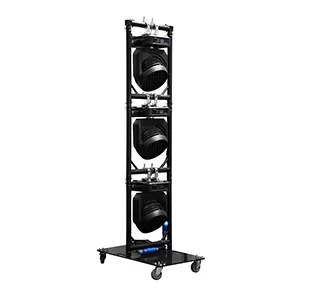
Truss is the “lifeline beam” above the stage. Line array speakers, moving head lights, LED screens, special effects devices, lifting mechanisms, and other equipment are hung on it, and the total load can reach several tons. The truss hangs quietly overhead; when no accident occurs, it is rarely noticed. Once structural failure happens, the consequences are irreversible.
The significance of TÜV testing is to turn luck based on experience into certainty verified by testing, ensuring that every truss above the crowd has undergone rigorous test verification, protecting the safety of performers and audiences.
[In the next issue, we will take a closer look at why TÜV certification has become the core entry ticket to the truss industry.]
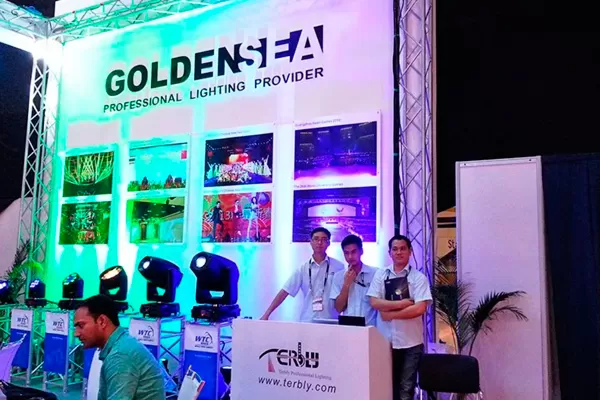 The First Show in Palme Bombay 2013
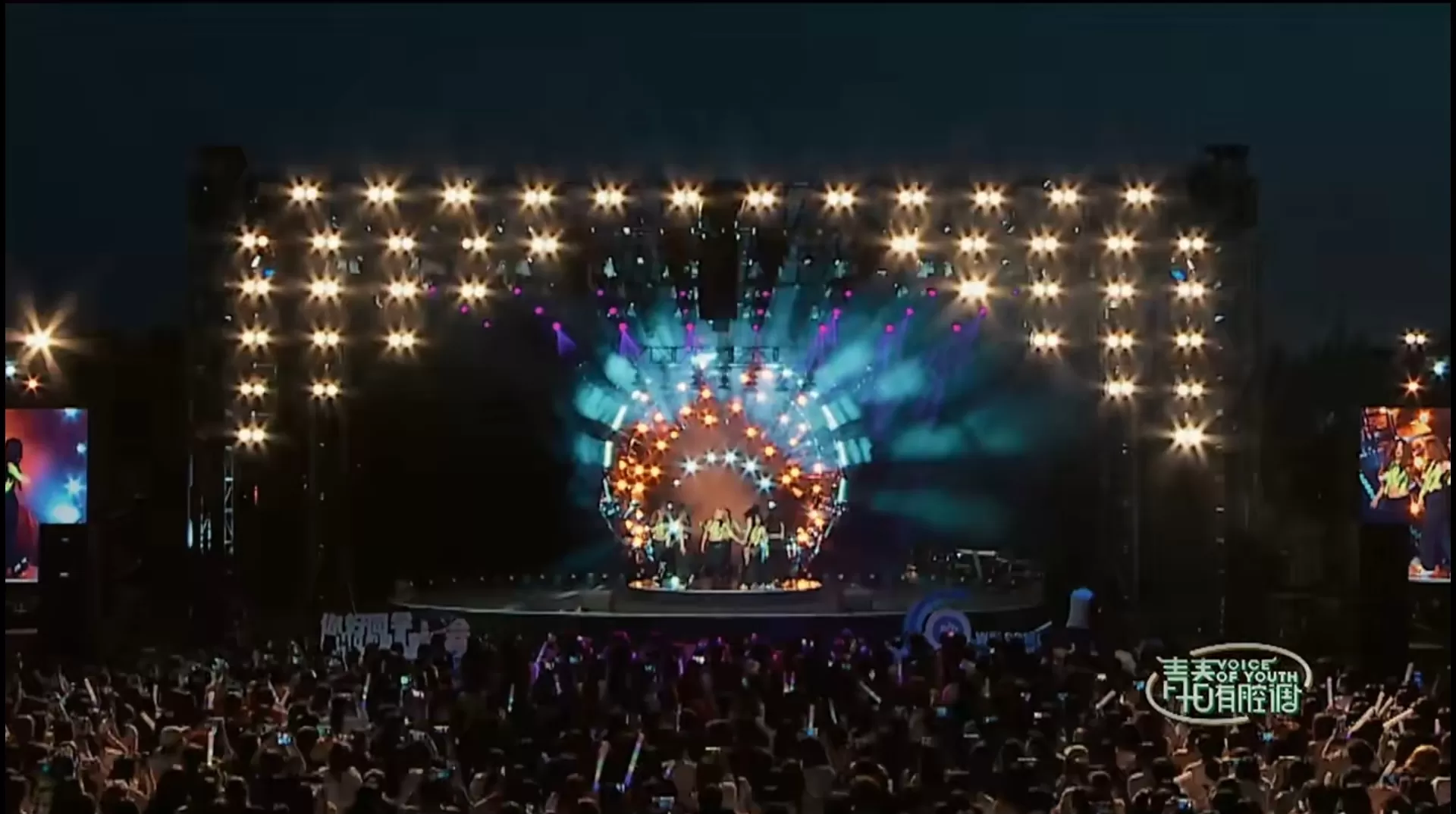 WTC Supports ‘Hello, Students’Campus Youth Concert
 Congratulations on Passing the HT44 Bearing Test for Intellectual Truss!
 Get Immersed in the Melody of Love with Golden Sea at Richard Clayderman China Tour
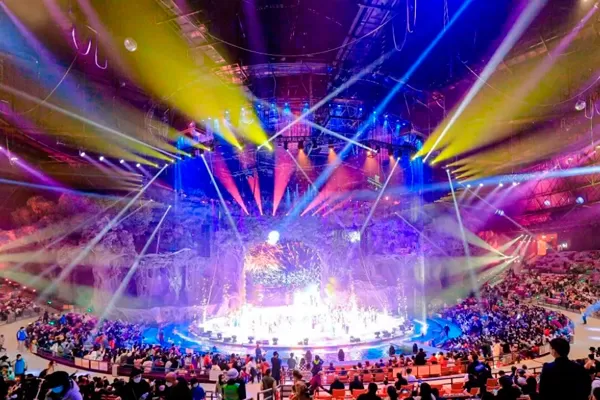 Golden Sea Fixtures Together with Chimelong International Circus Presented a Circus Feast