-
- EN
-
In 2026, the stakes attached to a truss procurement decision have never been higher. Modern event structures carry LED walls weighing several tonnes, line arrays with significant dynamic loading, and moving lights that generate cyclic forces that static load tables alone do not capture — and all of this sits directly above crews, performers, and audiences. A structural failure is not a warranty claim; it is a catastrophic incident with criminal liability, insurance consequences, and reputational damage that no price saving can offset.
For buyers sourcing from truss manufacturers — whether for touring production, rental fleet expansion, or permanent installation — the 2026 procurement challenge is distinguishing a certified, audit-ready truss aluminium factory from a low-cost workshop that produces visually similar products without the material traceability, welding process control, or third-party verification that safety-critical structural components require. World Truss (WTC) positions its manufacturing capability around a documented quality system: EN 1090 and ISO 3834 certificates, ISO 9001:2015, international welder qualifications, material inspection records, and third-party test reports — the documentation set that a compliance audit requires and that a serious buyer should demand from any supplier before placing a structural order.
The term "TUV certified" appears frequently in truss marketing materials, and it is frequently misunderstood by buyers. TUV — Technischer Uberwachungsverein — is an independent third-party inspection and certification body, not a standard in itself. What matters for structural aluminum fabrication is not the TUV logo on a brochure but the specific standard to which the manufacturer has been certified, the scope of that certification, and whether the certificate is current, traceable, and covers the products being purchased.
For structural aluminum fabrication in EU-facing projects and for any project where engineering accountability is required, the two most relevant standards are EN 1090 and ISO 3834.
EN 1090 is the European standard for the execution of steel and aluminum structures. Manufacturer certification to EN 1090 — issued by a notified body such as TUV Rheinland — confirms that the manufacturer has a documented and audited execution capability for structural metal fabrication, including material traceability, welding process control, dimensional inspection, and quality management. EN 1090 certification is a prerequisite for CE marking of structural components in the EU, and it is increasingly required by event production companies and venue operators as evidence of manufacturing competence.
ISO 3834 is the international standard for quality requirements for fusion welding of metallic materials. It defines the welding quality management requirements — welding procedure specifications, welder qualification, weld inspection, and corrective action — that underpin the structural integrity of welded aluminum fabrications. ISO 3834 certification is often required alongside EN 1090 because welding is the primary structural process in truss manufacturing and the primary source of structural variability between manufacturers.
When evaluating truss manufacturers, request the following documentation before placing any structural order:
| Document | What It Confirms |
|---|---|
| EN 1090 certificate (current) | Manufacturer's execution capability for structural aluminum fabrication |
| ISO 3834 certificate (current) | Welding quality management system — procedures, qualifications, inspection |
| ISO 9001:2015 certificate | General quality management system — process control and corrective action |
| International welder certificates | Individual welder qualification to recognized standards |
| Welding procedure qualification records (WPQR/WPS) | Documented and tested welding procedures for the specific joint configurations used |
| Material inspection certificates | Traceability from incoming aluminum to finished product — heat numbers, alloy, temper |
| Third-party test reports | Independent structural testing of representative products |
| Product liability insurance | Financial coverage for structural failure claims |
WTC publishes all of these document categories as part of its quality documentation set — the baseline that a serious buyer should use as the minimum acceptable standard when evaluating any truss aluminium factory.
The structural performance of an aluminum truss is determined by two factors that are invisible in a product photograph: the material grade and temper of the aluminum, and the quality of the welds that join the structural members. Both factors are controllable by the manufacturer and verifiable by the buyer — but only if the buyer asks the right questions.
Aluminum alloy EN AW-6082 in the T6 temper is the material specification that professional event truss manufacturers use for structural members. The 6082 alloy is a medium-strength Al-Mg-Si alloy that combines good weldability with the mechanical properties required for structural applications — tensile strength in the T6 temper typically in the range of 290 to 310 MPa, with yield strength around 250 to 260 MPa. The T6 temper designation indicates that the material has been solution heat-treated and artificially aged to achieve the maximum strength for the alloy.
The critical buyer-level implication of the 6082-T6 specification is traceability: the material must be supplied with a mill certificate that confirms the alloy designation, the temper, the heat number, and the mechanical test results for the specific batch. A manufacturer who cannot provide material certificates for the aluminum used in their truss products cannot demonstrate that the material meets the specification that their load tables are based on — which means the load tables are not defensible.
WTC states that its products use EN AW-6082 T6 aluminum, and its documentation set includes material inspection certificates and aluminum pipe test reports that provide the traceability chain from incoming material to finished product.
The welds in an aluminum truss are the structural elements that transfer load between the main chords and the bracing members. The strength of a weld depends on the welding procedure — the parameters of current, voltage, travel speed, and shielding gas that determine the weld geometry and fusion quality — and on the skill and qualification of the welder who executes it. A weld that looks acceptable on visual inspection may have internal porosity, incomplete fusion, or a heat-affected zone that has reduced the parent material's strength below the design assumption.
The quality controls that distinguish a professional truss aluminium factory from a low-cost workshop are:
Welding procedure specifications (WPS) that define the approved parameters for each joint configuration, developed and qualified through destructive testing of representative weld samples. Welder qualification records that confirm each welder has demonstrated the ability to produce acceptable welds to the applicable WPS. Weld inspection records — visual inspection as a minimum, with penetrant testing (PT) for critical joints — that document the inspection results for each production batch. And corrective action records that document how non-conforming welds are identified, dispositioned, and prevented from recurring.
WTC lists international welder certificates and welding procedure qualification as part of its documented quality system — the evidence that welding process control is managed rather than assumed.
The only reliable basis for comparing truss products from different manufacturers is engineering data — load tables that specify the allowable load as a function of span, the load case assumptions (point load or distributed load), the allowable deflection limit, and the safety factor applied. A manufacturer who cannot provide load tables for their products is a manufacturer whose structural performance cannot be independently verified.
WTC publishes truss documentation — including the spigot truss PDF — that specifies tube sizes, alloy (EN AW-6082 T6), and loading tables by span. This is the format that engineering data should take. When reviewing a load table from any supplier, confirm the following:
The load case definition — whether the table is based on a uniformly distributed load (UDL) across the full span, a point load at midspan, or a combination. UDL and point load tables produce different allowable loads for the same truss, and comparing a UDL table from one supplier against a point load table from another is not a valid comparison.
The span definition — whether the span is measured between support centerlines or between support faces, and whether the table accounts for the connection hardware's contribution to the effective span.
The deflection limit — the maximum allowable midspan deflection as a fraction of the span (commonly L/300 or L/360 for event truss applications). A truss that meets a less stringent deflection limit will appear to have a higher allowable load than one that meets a more stringent limit.
The safety factor — the ratio of the calculated failure load to the allowable load stated in the table. A safety factor of 2.0 is common for event truss applications; a lower safety factor produces a higher allowable load for the same truss geometry.
| Parameter | What to Specify |
|---|---|
| Truss type | Spigot, bolted, pre-rig, ladder, square, triangular |
| Main tube specification | Diameter, wall thickness, alloy, temper |
| Bracing tube specification | Diameter, wall thickness, alloy, temper |
| Connection hardware | Pin/bolt grade, spigot dimensions, compatibility with existing stock |
| Span and load case | Maximum span, load type (UDL or point), allowable deflection |
| Accessories required | Base plates, corners, sleeves, towers, roof grids |
| Finish | Mill finish, anodized, or powder-coated; outdoor or indoor application |
| Documentation required | EN 1090, ISO 3834, ISO 9001, load tables, material certificates, test reports |
A factory audit is the most reliable method for verifying that a manufacturer's paper compliance — their certificates and documentation — reflects their actual production capability. The following audit checklist covers the areas that most directly affect structural safety.
Request to see the incoming material receiving process. Confirm that incoming aluminum is received with mill certificates that include the heat number, alloy designation, temper, and mechanical test results. Confirm that the heat numbers are recorded against the production batch records so that the material used in any specific truss can be traced back to the mill certificate. Confirm that materials are stored in a way that prevents mixing of different alloys or tempers — a common failure mode in workshops that handle multiple material grades.
Request to see the WPS documents at the welding stations. Confirm that the welders are working to the approved parameters and that the WPS documents are current and accessible. Request to see the welder qualification records and confirm that the qualifications are current — welder qualifications typically require periodic renewal through re-testing or production record review. Request to see the weld inspection records for a recent production batch and confirm that the inspection results are documented and that any non-conformances have been dispositioned.
For rental fleet applications, dimensional interchangeability between trusses from different production batches is a critical requirement — a spigot that does not fit the sleeve from a different batch creates a field assembly problem that can delay a show or force a structural compromise. Confirm that the manufacturer uses jigs and fixtures for repeatable geometry, go/no-go gauges for spigot dimensions, and interchangeability checks between production batches.
Request copies of the current third-party test reports and confirm that the tests were conducted on production-representative samples rather than on specially prepared specimens. Request the current product liability insurance certificate and confirm the coverage amount and scope. WTC lists both third-party test reports and product liability insurance as part of its documentation set.
Step one: define the load case. Document the equipment list — LED wall panels, moving lights, audio equipment — with weights and positions. Apply the dynamic load factors appropriate for the equipment type and the structural safety factor required by the project's engineering specification or the venue's structural engineer.
Step two: select the truss family and connection type. Spigot connections are faster to assemble and disassemble for touring applications; bolted connections provide higher rigidity for permanent or semi-permanent installations. Confirm that the selected truss family has load tables that cover the required spans and load cases.
Step three: require the full documentation package before issuing the purchase order. Do not accept a certificate number without a copy of the certificate. Confirm that the certificates are current and that the scope covers the specific products being purchased.
Step four: run a pilot batch. Order a small quantity and verify dimensional interchangeability with your existing stock, assembly time with your crew, and fit with your clamps and accessories before committing to the full order volume.
Step five: lock the labeling and SKU system. Establish a clear labeling convention that prevents mixing of non-compatible truss series in the field — a common cause of structural incidents in rental fleets where multiple series are in circulation simultaneously.
| Cost Item | Low-Quality Truss | Certified Quality Truss |
|---|---|---|
| Structural incident risk | Higher — unverified materials and welding | Lower — traceable materials and controlled welding |
| Rental fleet repair rate | Higher — bent chords, cracked welds, deformed spigots | Lower — consistent geometry and weld quality |
| Audit failure risk | Higher — incomplete documentation | Lower — full certificate and test report package |
| Show downtime from component failure | Higher — field failures require emergency replacement | Lower — reliable components reduce field failures |
| Insurance premium impact | Higher — undocumented structural components | Lower — certified components support favorable terms |
| Inspection labor | Higher — more frequent inspection required | Lower — documented quality reduces inspection frequency |
A routine inspection program — checking for bent chords, cracked welds, deformed spigots, and missing pins or bolts after each deployment — is the maintenance investment that extends truss service life and provides the inspection records that an audit requires. Retire-or-repair rules should be documented and consistently applied: a truss with a bent chord or a cracked weld should be removed from service until it has been assessed by a qualified person, not returned to the rental pool because it "looks okay.
"The TCO argument for certified truss is straightforward: the per-meter price premium for a certified product from a documented manufacturer is typically 15 to 30% above the lowest-cost alternative. A single structural incident — even one that does not result in injury — generates investigation costs, legal costs, insurance costs, and reputational damage that exceed the price premium on an entire fleet replacement. The risk-adjusted cost of the cheap option is almost always higher than the cost of the certified option.
In 2026, evaluating truss manufacturers is a safety and liability decision before it is a procurement decision. The aluminum tubes and welds that make up a truss system carry the equipment and the people that depend on them — and the difference between a manufacturer who can demonstrate material traceability, welding process control, and third-party certification and one who cannot is the difference between a defensible structural decision and an unquantifiable risk.
World Truss (WTC) provides the documentation set that a compliance audit requires: EN 1090 and ISO 3834 certificates, ISO 9001:2015, international welder qualifications, material inspection records, third-party test reports, and product liability insurance. Start your evaluation with the documentation package, verify it through a factory audit, and confirm the load data against your specific load case before committing to a structural order.
Visit the World Truss product page to review the full range and submit your project requirements for a matched configuration recommendation and quotation.
Visit the World Truss product page to review the full range, then submit the following details to receive a matched configuration and quotation:
| Parameter | What to Provide |
|---|---|
| Work condition | Indoor or outdoor, touring or fixed, wind exposure, humidity or salt air, event type (concert, exhibition, broadcast) |
| Quantity | Total meters, corners, towers, roofs, accessories, and spare parts plan |
| Size and spec | Truss series (square, triangle, ladder, pre-rig), span and height, connection type (spigot or bolted), tube specs, compatible clamps |
| Target metrics | Maximum load (kg), span (m), allowable deflection, safety factor policy, required certificates (TUV, CE, EN 1090, ISO 3834, ISO 9001) |
| Current problem | Unclear load data, inconsistent fitment, weld quality concerns, failed audits, high breakage or repair rate |
Beyond the aluminum structure, a serious truss manufacturer provides engineered load tables for each series and span, traceable material certificates, documented welding procedures and welder qualifications, a certificate package (EN 1090, ISO 3834, ISO 9001), third-party test reports, and product liability insurance. This documentation is what makes a structural deployment defensible in an audit or an incident investigation.
TUV is the certification body — the independent organization that audits and issues the certificate. EN 1090 and ISO 3834 are the standards that define what the manufacturer must demonstrate to receive the certificate. EN 1090 covers the execution of structural aluminum fabrication; ISO 3834 covers welding quality management. A TUV certificate is only meaningful when it specifies which standard it covers and confirms that the scope includes the products being purchased.
Certified truss reduces the probability of structural incidents, cuts rental fleet repair rates from bent components and cracked welds, prevents audit failures that delay projects, and supports favorable insurance terms. The per-meter price premium for certified truss is typically 15 to 30% — a fraction of the cost of a single structural incident, an emergency replacement during a show, or a project delay from a failed compliance audit.
Not necessarily — but you must verify series compatibility before mixing products in the field. Confirm that spigot dimensions, bolt patterns, corner fittings, sleeves, and base plates are compatible with your existing stock. Run a pilot batch and conduct interchangeability checks before committing to the full order. Never mix non-compatible series in a structural assembly without engineering sign-off.
Load case (equipment list with weights and positions, dynamic factors, safety factor policy), spans and heights
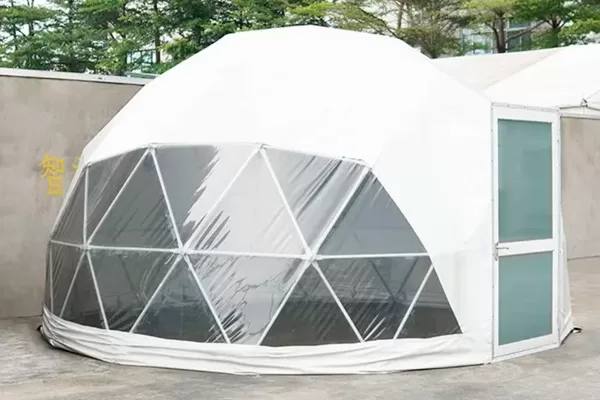 【WTC】VT5 Dome Tent
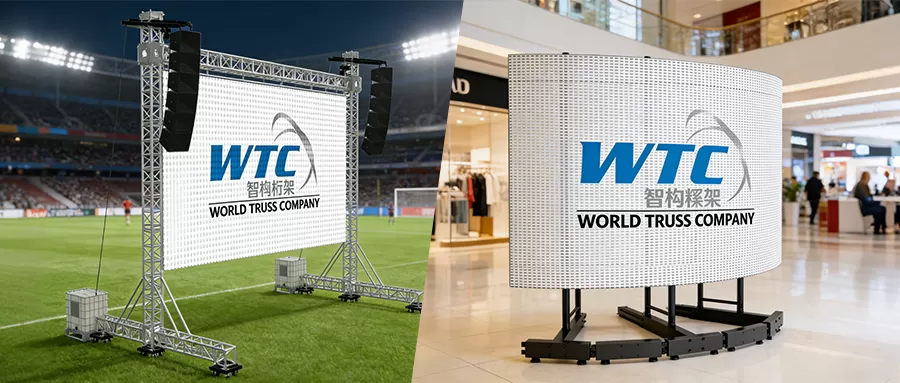 Choose Right Once, No Rework: LED Screen Gantry & Back Frame | Essential Buying Guide
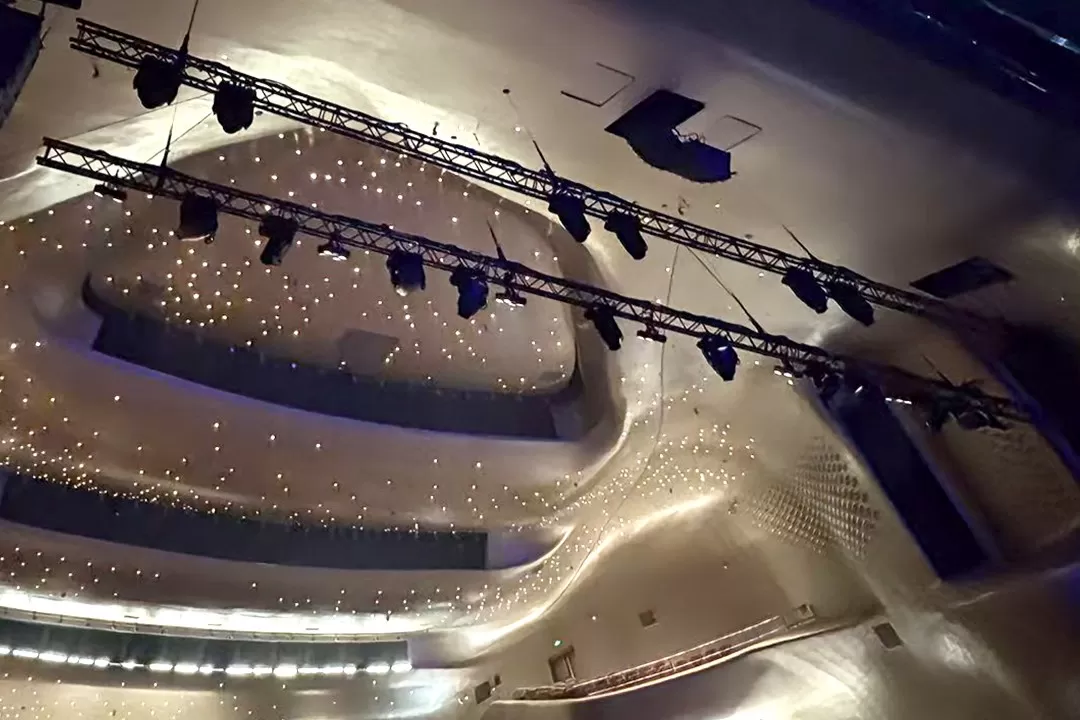 WORLDTRUSS(WTC) Truss Apply in the Molière Opera Tour of China, Enable Stage Moments Extraordinary
 Square Truss: Why Heavy-Duty Systems Are Essential for Massive LED Screens in 2026
 Prolight+Sound Shanghai 2013