-
- EN
-

In 2026, audiences expect more than a front-facing stage — they want 360° sightlines, layered lighting, and environments that feel fully immersive. That is why the circle truss is showing up everywhere from festivals and touring shows to brand activations and corporate events. This guide breaks down the design and production logic behind the circular truss system, including how it supports modern lighting, LED, audio, and scenic concepts.
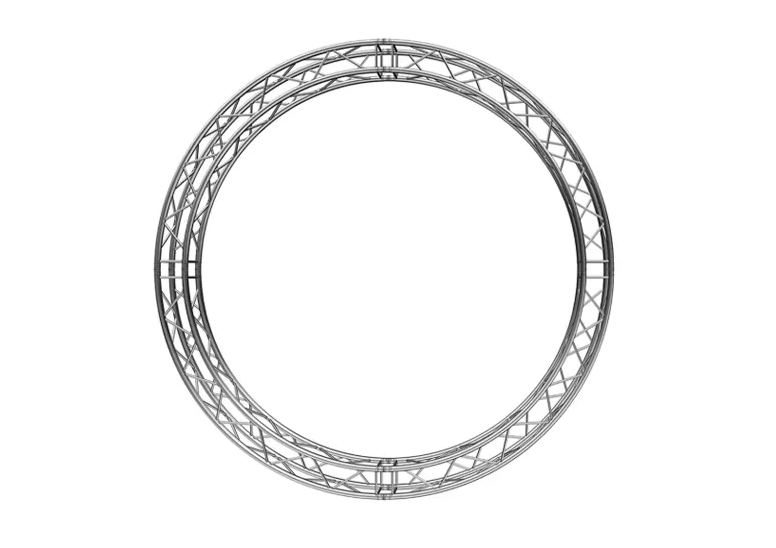
The shift from front-facing stages to in-the-round and semi-360 configurations reflects a fundamental change in audience expectation. Immersive events demand that every seat feels like the best seat — and a circle truss hung centrally above the performance area is one of the most efficient ways to achieve that.
| Layout Type | Circle Truss Advantage |
|---|---|
| In-the-round (full 360°) | Central hang covers all audience angles equally |
| Semi-circular (festival main stage) | Creates symmetrical depth behind and above performers |
| Thrust stage | Extends visual coverage into the audience without additional ground support |
| Brand activation pod | Creates a self-contained visual environment in open floor plans |
Diameter planning: match truss diameter to the stage footprint — a common starting point is 60–80% of the performing area width
Trim height: higher trim creates a cleaner aesthetic but reduces beam angle impact; lower trim intensifies intimacy
Center-of-gravity: circular structures require careful load distribution planning — uneven loading across the ring creates asymmetric stress on the suspension points
Rigging points: three to four suspension points are standard for most circular truss systems; confirm with a structural engineer for heavier payload configurations
A circle truss creates natural symmetry that rectangular or linear truss cannot replicate. The closed-loop geometry produces consistent beam angles from every fixture position, enables true radial lighting effects, and creates the clean "halo" aesthetic that has become one of the defining visual signatures of premium live events.
| Lighting Application | Circle Truss Benefit |
|---|---|
| Moving head arrays | Symmetrical beam spread across 360° of stage and audience |
| Strobe and effect lighting | Even distribution eliminates dead zones |
| Pixel bars and LED tape | Continuous ring of pixel content visible from all angles |
| Downlighting for performers | Central wash with consistent coverage beneath the ring |
Spigot or bolt connections between segments must be confirmed for the combined load of all fixtures at full extension
Cable management: plan cable runs along the inner chord to keep external surfaces clean for camera and audience sightlines
Rigging point load: calculate the total fixture weight plus cable and hardware, divided by the number of suspension points, and apply an appropriate safety factor
Redundancy: for touring and festival applications, secondary safety cables on all suspended fixtures are standard practice
LED integration on circular truss systems has moved well beyond simple wash lighting. In 2026, the circle truss is often the primary canvas for pixel-mapped content — creating a dynamic overhead feature that transforms the entire environment.
| LED Application | Visual Effect | Production Consideration |
|---|---|---|
| Continuous LED ring screen | Wrap-around content visible from all audience positions | Weight distribution and power requirement planning |
| Pixel tape on inner chord | Animated halo effect; programmable color and motion | Data routing and DMX or ArtNet distribution |
| LED ceiling feature | "World-building" overhead environment | Structural load limit must accommodate panel weight |
| Kinetic LED elements | Moving light and content simultaneously | Requires integration of automation and media server control |
Power distribution: map the total LED draw across the ring and plan power drops to avoid overloading any single feed point
Data routing: run data cable alongside power inside the truss chord for a clean external appearance
Control system: confirm compatibility between your media server and the LED product being used — pixel mapping requires the right resolution and protocol alignment
Content ROI: invest in building reusable template content for circular formats — touring shows and brand roadshows can redeploy the same content package across multiple venues
A circle truss hung above the audience area supports distributed speaker hangs that improve coverage consistency compared to a single front-facing point source. The circular geometry allows speakers to be positioned at regular angular intervals, reducing hot spots and improving intelligibility across the listening area.
| Audio Application | Benefit |
|---|---|
| Distributed delay speakers | Even SPL across large radius without excess throw from main system |
| Fill speakers for in-the-round | Consistent coverage at all audience angles |
| Subwoofer cardioid arrays | Can be suspended from circular truss for bass control |
Drape and soft goods: fabric panels hung from a circle truss create dramatic curtain effects — inner-lit or backlit for added visual depth
Mirror and reflective elements: suspended mirror panels create multiplication effects that enlarge the perceived visual environment
Kinetic scenic: motorized elements hung from a circle truss can descend, rotate, or open as part of a show sequence
Every circular truss system used in a public event environment must meet the following minimum standards:
Load calculation by a qualified structural or rigging engineer covering all suspended loads
Certified hardware throughout — shackles, chain motors, wire rope, and clamps all rated and documented
Regular inspection before each event, particularly at segment connection points
Compliance with local rigging regulations — requirements vary significantly between markets
| Specification | Options | Notes |
|---|---|---|
| Diameter | 2 m to 12 m+ custom | Match to stage footprint and venue ceiling height |
| Tube size | 50 mm, 76 mm OD typical | Larger tube for heavier payload applications |
| Truss type | Box truss or ladder truss | Box truss for higher load capacity |
| Segment lengths | 500 mm to 1000 mm typical | Shorter segments allow tighter radius; more transport cases required |
| Connection system | Spigot or bolt | Confirm for your payload and assembly speed requirements |
| Finish | Natural aluminum or black powder coat | Black reduces visual presence under stage lighting |
| Accessory compatibility | Conical couplers, half-coupler clamps, cable management clips | Confirm standard accessories fit your existing inventory |
| Factor | What to Plan |
|---|---|
| Transport cases | Custom curved cases per segment — confirm dimensions for vehicle loading |
| Setup time | Segment assembly and alignment adds time vs. straight truss — factor into crew call |
| Crew requirement | Two-person minimum for segment alignment and connection |
| Spare parts | Stock extra spigot pins, safety clips, and end caps |
As event design moves toward immersive environments and audience-first layouts, the circle truss has become the go-to overhead structure for symmetry, visual depth, and scalable impact. With the right circular truss system specification — diameter, payload planning, and compatible accessories — you can build a centerpiece that looks premium, rigs efficiently, and delivers consistent results across touring, rental, and permanent installation applications.
Q1: What is a circle truss used for in event production?
A circle truss is used as an overhead rigging structure for lighting fixtures, LED elements, audio speakers, and scenic décor. Its closed-loop geometry creates a symmetrical halo effect above the stage or activation area, supporting 360° audience coverage and consistent visual impact from all sightlines.
Q2: How do I choose the right diameter for a circular truss system?
Base the diameter on your stage footprint, ceiling or trim height, and the visual scale you want to achieve. A common starting point is 60–80% of the performing area width. Confirm the diameter against your rigging point layout and total payload before ordering.
Q3: Can a circular truss system support LED screens and moving lights together?
Yes, but only when the combined load is within the truss specification and suspension point ratings. Always perform a complete load calculation including fixtures, LED panels, cables, and hardware before confirming the configuration. Use certified rigging hardware throughout.
Q4: Is a circular truss harder to transport and assemble than straight truss?
It requires more planning — curved transport cases, careful segment alignment, and a defined assembly sequence. Modular segment designs with spigot connections are significantly faster to assemble than bolt-only systems. Factor additional crew time into your production schedule for the first few events until the crew is familiar with the system.
Q5: What information should I provide to get an accurate circular truss quote?
Target diameter, truss type and tube size, finish color, segment length preference, connection system, accessories required, estimated total payload (lights, LED, audio, scenic), and shipping destination and timeline.
 WTC Invited to Visit the Activities of Guangdong Academy of Sciences
 Greater Snow
 One-Stop Aluminum Truss Solutions Provided - WTC Supports Your Project from Design to Setup
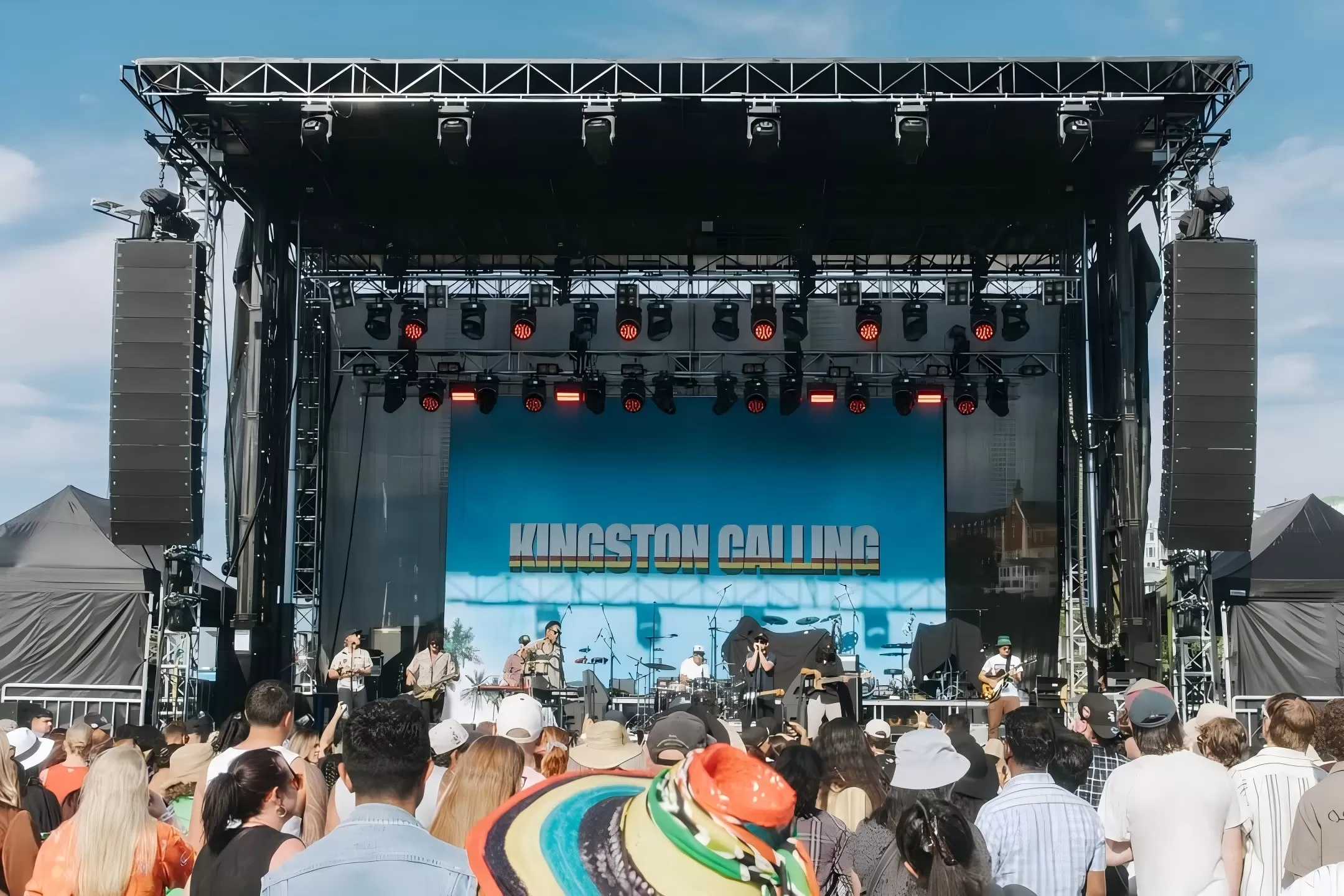 ‘Kingston Calling 2026’Tour - Wellington Stop
 Beam Connector