-
- EN
-

Global shows and installations—across touring, broadcast, corporate events, and fixed venues—share the same procurement dilemma: how to lock in consistent structural performance, compliance, and delivery reliability while protecting margins. For OEM buyers and large distributors, the smartest way to achieve this is no longer “buying from a trader,” but building a direct, auditable partnership with a high-technology aluminum truss factory in China—one that can meet international engineering expectations and operate like an extension of your supply chain.
This article breaks down what matters to professional buyers: standards, metallurgy, welding quality, traceability, test regimes, logistics engineering, and lifecycle support.
The perception of “mass-produced, low-quality” is outdated for top-tier factories. The real change is process capability:
CNC tube cutting + end milling for repeatable fit-up (reducing weld gaps and distortion).
Dedicated welding fixtures/jigs to control geometry and minimize cumulative tolerance errors in long truss runs.
Robotic or semi-automated welding for high-repeat SKUs, paired with qualified manual welding for custom nodes.
Digital QA records: weld parameter tracking, inspection logs, batch traceability.
For OEM and rental-market buyers, this matters because aluminum truss quality is not just “strength”—it’s repeatability. Consistent dimensional tolerance reduces onsite “fighting the truss,” speeds rigging, and lowers labor cost (a hidden but major driver of total cost).
If your truss is used in public events, liability is global. Serious buyers increasingly require standardized documentation.
EN 1090 (execution of steel/aluminum structures, CE marking in EU context)
ISO 3834 (welding quality requirements)
ISO 9001 (quality management system)
Third-party audits/inspections (e.g., TÜV/SGS/BV depending on region and customer preference)
A aluminum truss factory that understands these frameworks can support OEM clients with:
Material certificates (MTC) and batch traceability
WPS/PQR (welding procedure specifications / procedure qualification records)
Welder qualifications
Dimensional inspection reports
Load test / FEA package for specific configurations (roof, goalpost, grid)
OEM advantage: You can sell into stricter markets with fewer obstacles because your supply chain is “paper-ready” for audits.
Many truss disputes originate from vague material language (“aluminum alloy”) rather than engineering-grade specs.
Alloy & temper (e.g., 6082-T6 / 6061-T6 are common in structural applications; selection depends on regional preference, availability, and forming/welding needs)
Tube OD and wall thickness for chords and braces
Connector system (spigot/bolt, conical coupler, etc.) and compatible tolerances
Surface finish (mill finish, anodized, powder coated) and performance expectations (scratch resistance, salt spray target, etc.)
Yield strength and fatigue behavior influence safe working loads and long-term touring durability.
Weldability + heat-affected zone (HAZ) behavior affects real-world performance more than brochure numbers.
Clear specs prevent “quiet substitutions” that look identical but perform differently.
Add-on for big B clients: request a material substitution control process (no alloy/temper change without written approval + updated MTC).
Truss is a welded structure; welding quality drives both strength and fatigue life.
Qualified weld procedures for your alloy series and joint types
Fixture-based welding to control distortion (critical for connector alignment)
100% visual inspection + sampling dimensional checks
NDT (non-destructive testing) options for critical batches: dye penetrant (PT), radiography (RT) where applicable, or customer-specified regimes.
Create a tiered inspection plan:
Standard SKUs: visual + dimensional + periodic destructive sample coupons
High-risk builds (roof systems, long spans, touring grids): add NDT + third-party witness testing
This keeps cost rational while protecting your liability exposure.
Large event organizers and integrators don't buy “sticks of truss.” They buy systems: roof structures, LED walls, PA wings, goalposts, mother grids, and stage decks.
A factory that can support OEM clients should offer:
Load tables for standard configurations
FEA reports for custom spans, cantilevers, and mixed loading
Connection node engineering (corners, hinges, folding sections, sleeve blocks)
Compatibility planning with motors, shackles, clamps, and regional rigging practices
Maximum recommended span under defined load cases
Deflection criteria (serviceability)
Safety factor methodology aligned with your market norms
Documentation pack format for your end customers
“Private label” is not just a logo—it’s brand risk management.
Laser-etched branding on connectors / end plates
Serialized ID + QR traceability (links to batch, MTC, inspection report)
Custom packaging (drop-test capable cartons, foam, corner protection)
Color system: powder coat RAL matching, anodizing options
Proprietary accessories: custom sleeve blocks, base plates, hinges, dollies, stacking frames
Why it's commercially smart:
Traceability + consistent packaging reduces damage claims, speeds warehouse handling, and increases resale value in the secondary market.
Truss is bulky. For global buyers, landed cost is heavily driven by cube efficiency and how well the factory designs packaging for 20GP/40GP/40HQ.
Provide container loading plans (SKU mix, stacking method, dunnage)
Offer nested/stackable designs (where structurally appropriate)
Use palletization strategy optimized for forklift workflows and damage prevention
Design folding truss / hinge truss options for touring and airfreight constraints
For touring and rental operations, downtime is expensive. A strategic factory partner supports lifecycle operations:
Spare parts availability (connectors, pins, bolts, end plates, braces)
Fast remake service for damaged segments with matching tolerance and finish
Technical consultation for unusual builds (LED wall cantilever, asymmetrical roof, mixed truss series)
Revision control: engineering change notices (ECN) so your system stays consistent across years
OEM best practice: negotiate a spare parts SLA and define “compatibility windows” (e.g., connector revisions remain backward compatible for X years).
For big-B buyers, the decision should be audit-driven. Use this checklist:
CNC cutting/milling capability and calibration records
Welding fixtures for each truss series
Weld procedure documentation (WPS/PQR) and welder qualifications
QA inspection flow + traceability system
Surface finishing line control (powder coat thickness targets, cure profiles)
Load tables and/or test reports
Dimensional tolerance specs
Connector interchangeability verification
NDT capability or third-party inspection cooperation
Capacity planning and lead time stability
Packaging standards and loading plans
Warranty terms + spare parts policy
IP protection and OEM exclusivity options (if required)
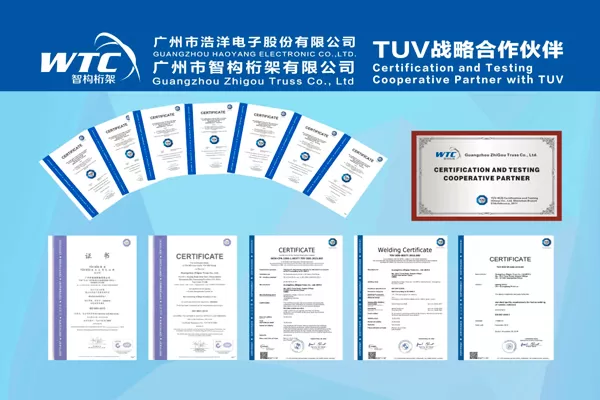
WTC Truss is positioned for international OEM and large-scale event clients because we combine manufacturing process control with export-grade documentation and engineering support.
We support:
Touring-grade aluminum truss roof systems.
Fixed installations (circular truss, architectural applications)
OEM/private label programs with traceability and packaging engineering
Long-term spare parts and revision-controlled compatibility
 Sincerely Thank You for Witnessing the Growth of WTC!
 TÜV Explained: Part 4 – Why Is TÜV Certification the Core Entry Ticket to the Truss Industry?
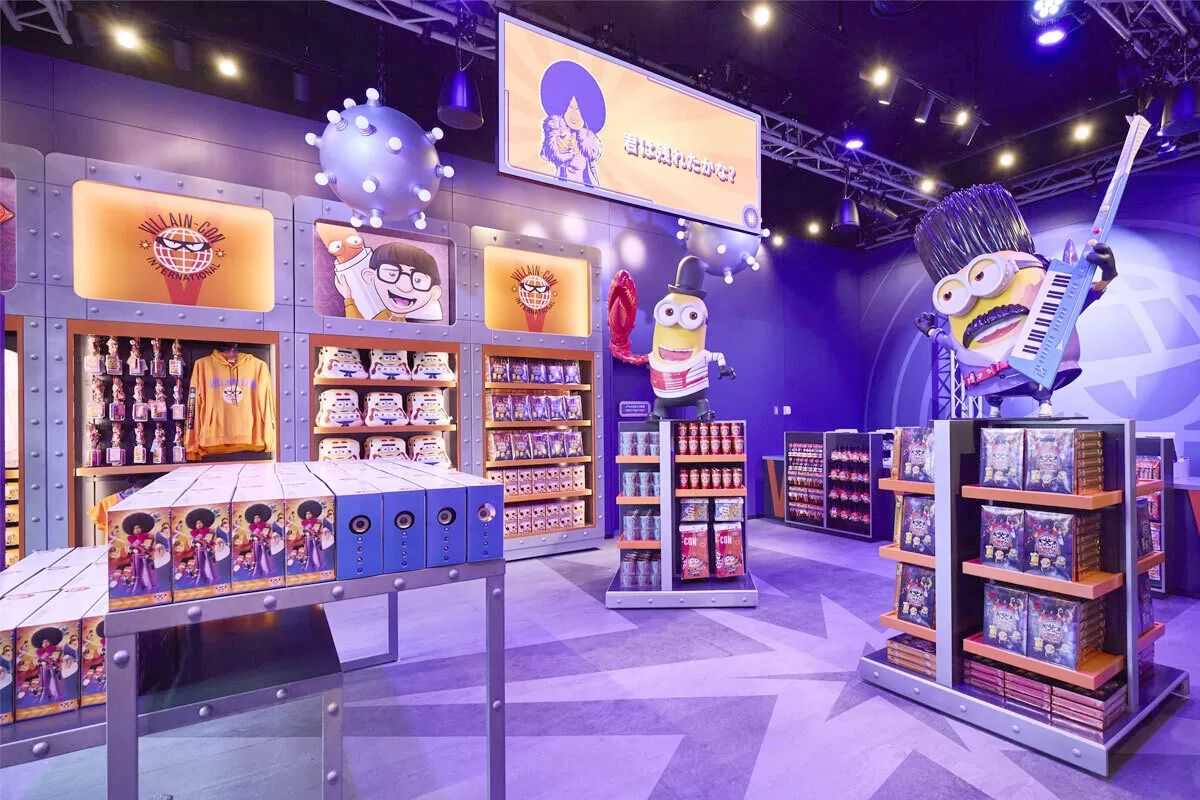 WTC Supports Universal Studios Japan with Advanced Aluminum Truss Systems
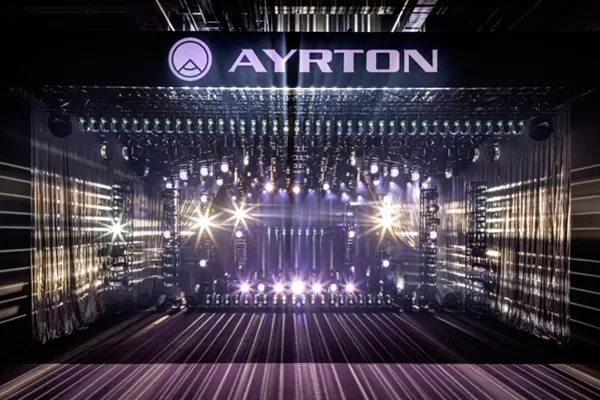 Golden Sea Amazed All Visitors at Prolight+Sound 2024 with AYRTON!
 Get Immersed in the Voice of Kelly Chen World Tour with Golden Sea Lighting