-
- EN
-
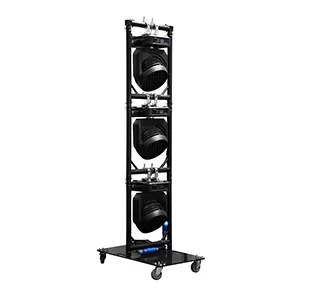
In 2026, the finish on a touring truss is no longer a cosmetic afterthought — it is a production decision that affects broadcast quality, client perception, and long-term maintenance cost. Stages are more immersive, lighting plots are denser, and productions are filmed in higher resolution than ever before. A natural aluminum truss that reflects stray light into a camera lens, or a black powder coated truss that arrives on site with chips and scratches from three weeks of trucking, creates a problem that the lighting designer and the production manager both notice. The finish choice has to work under harsh stage lighting, survive repeated load-ins and load-outs, and hold up through a touring season without generating a repaint bill that erodes the rental margin.
WorldTruss positions its touring truss lineup as a high-performance modular system built on EN AW-6082 T6 aluminum — the material specification that professional touring structures require — and supports powder coating in RAL colors across its truss lines, giving buyers the option to specify the finish that matches their visual standard and their handling reality. Understanding how black powder coated truss and natural aluminum age differently under touring conditions, and what specifications to lock before placing a finish order, is the foundation of a procurement decision that holds up through a full touring season.
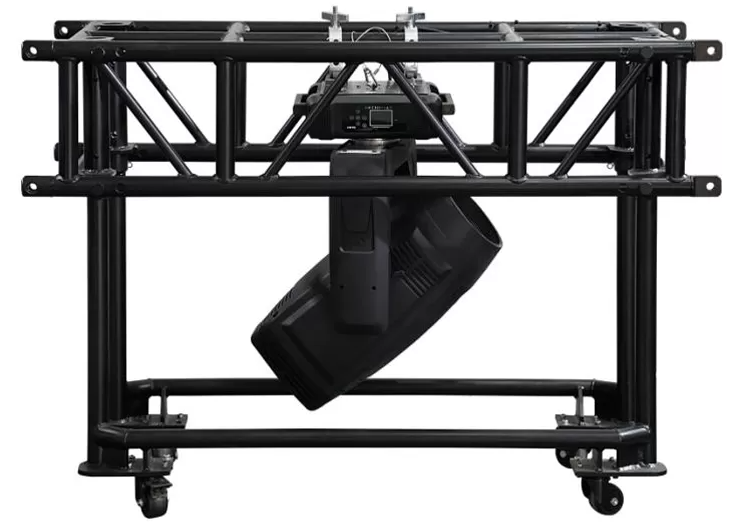
The finish decision on a touring truss is driven by three factors that have become more demanding in 2026: the visual behavior of the truss under stage lighting, the appearance consistency that premium clients expect across a touring season, and the inspection and audit requirements that a finish choice must not compromise.
Natural aluminum is a highly reflective surface. Under the high-intensity wash lighting and moving beam fixtures that characterize a 2026 touring rig, an uncoated aluminum truss reflects stray light in directions that the lighting designer did not intend — creating hot spots in the camera frame, reducing the contrast of the lighting design, and making the structural rig visually prominent in broadcast footage where it should be invisible. For productions that are filmed for streaming, broadcast, or social media content — which in 2026 means almost every major touring production — the visual presence of a reflective truss in the camera frame is a production quality issue, not just an aesthetic preference.
Black powder coating addresses this problem by converting the truss surface from a specular reflector to a matte absorber. A matte black surface reflects a fraction of the incident light compared to natural aluminum, and it reflects it diffusely rather than directionally — which means it does not create hot spots in the camera frame and does not compete visually with the lighting design. For immersive stage designs where the truss is visible to the audience, a matte black finish makes the structural rig recede visually, allowing the lighting and scenic elements to dominate the visual field.
For corporate tours and brand activations where the client has a defined visual standard, appearance consistency across the touring season is a contractual requirement. A natural aluminum truss that develops handling marks, oxidation patches, and clamp contact scuffs over the first few weeks of a tour does not meet a premium appearance standard. A black powder coated truss that arrives on site with consistent matte black surfaces — and that is maintained to that standard through the touring season — supports the premium production value that the client is paying for.
A finish choice that makes structural defects harder to detect creates a safety and liability problem. Black powder coating can obscure surface cracks, weld defects, and corrosion if the coating is thick or if the inspection protocol does not account for the coating. Natural aluminum, by contrast, makes surface defects more visible — a crack in an uncoated aluminum chord is easier to see than a crack under a layer of black powder coat. The inspection protocol for a black powder coated truss fleet must include procedures for detecting defects under the coating — not just visual inspection of the coating surface.
The practical question for a touring production is not which finish looks better on day one — both can look excellent when new — but which finish holds up better through a touring season of repeated load-ins, load-outs, trucking, and stacking.
Powder coating is a polymer coating that is electrostatically applied to the aluminum surface and then cured in an oven. The cured coating forms a continuous film that adheres to the aluminum surface and provides a uniform color and texture. The coating's durability depends on the coating thickness, the adhesion quality, the cure process, and the impact resistance of the specific powder formulation.Under touring conditions, the primary failure modes for powder coating are impact chipping at edges and corners — where the coating is thinnest and where handling impacts are most concentrated — and abrasion wear at clamp contact zones, spigot interfaces, and stacking contact points where the truss surfaces rub against each other or against steel hardware during transport. A chip or scratch in a black powder coat is visually prominent against the dark background, which means that a heavily used black powder coated truss can develop a visually inconsistent appearance faster than a natural aluminum truss of equivalent structural condition.
Entertainment truss guidance notes that powder coating should use a low-cure process appropriate for aluminum truss applications — a high-cure process can affect the mechanical properties of the 6082-T6 aluminum by over-aging the material and reducing its yield strength. Confirm with the supplier that the powder coating process is compatible with the aluminum alloy specification.
Natural aluminum develops a thin oxide layer on its surface through normal atmospheric exposure — a process that actually provides some corrosion protection but also produces a dull, slightly matte appearance that differs from the bright finish of freshly machined aluminum. Under touring conditions, natural aluminum develops handling marks, clamp contact impressions, and surface scuffs that are visible but do not represent structural damage. The absence of a coating layer means there is nothing to chip or peel — the surface degrades gradually and uniformly rather than through discrete chip events.
The primary disadvantage of natural aluminum under stage lighting is its reflectivity. The oxide layer reduces the specular reflectivity of the surface compared to polished aluminum, but the surface remains significantly more reflective than a matte black powder coat — which means the camera readiness and stage aesthetics arguments for black powder coating apply regardless of the age of the natural aluminum surface.
Specifying a finish for a touring truss order requires locking several parameters that affect both the appearance performance and the long-term durability of the coating.
| Finish Option | Reflectivity | Visual Character | Typical Application |
|---|---|---|---|
| Matte black (e.g., RAL 9005) | Very low | Absorbs stray light; visually recedes under stage lighting | Broadcast tours, immersive stages, premium corporate |
| Satin black | Low to medium | Slight sheen; more durable than matte in some formulations | Rental fleets with moderate appearance requirements |
| Textured black | Low | Structured surface that hides minor scratches better than smooth | High-turnover rental fleets |
| Natural aluminum | High | Reflective; industrial appearance | Budget productions, inspection-priority fleets |
| Custom RAL color | Varies | Brand color matching | Corporate activations, branded environments |
RAL 9005 jet black is the most commonly specified black for touring truss applications — it provides the lowest reflectivity and the most consistent matte appearance. Confirm with the supplier whether the stated RAL color is achievable in the specific powder formulation and whether the color consistency is maintained across production batches — color variation between batches is a common problem in custom powder coating that creates visual inconsistency in a rental fleet.
Request the following process parameters from the supplier before approving a finish specification:Cure temperature and time — confirm that the cure process is compatible with EN AW-6082 T6 aluminum and does not over-age the material. Adhesion test method — confirm that the coating adhesion is tested to a recognized standard (cross-cut adhesion test per ISO 2409 is a common reference). Coating thickness range — confirm the minimum and maximum coating thickness and the measurement method. Edge coverage strategy — confirm how the coating is applied at edges and corners, where coating thickness is typically lowest and impact chipping is most likely.
The clamp contact zones, spigot interfaces, and stacking contact points are the highest-wear locations on a touring truss. For black powder coated truss, these zones should be identified in the handling SOP and protected with rubber or neoprene pads where possible. Confirm with the supplier whether protective sleeves or edge guards are available for the specific truss series, and include the handling SOP in the fleet documentation.
WorldTruss touring truss is specified as EN AW-6082 T6 aluminum, and its product lines support powder coat customization including RAL color availability — confirm the specific RAL options and the batch color consistency guarantee before placing a fleet order.
| Application | Recommended Finish | Primary Reason |
|---|---|---|
| Broadcast and filmed tours | Matte black (RAL 9005) | Eliminates camera glare; visually recedes in frame |
| Immersive stage design | Matte black | Structural rig disappears; lighting design dominates |
| High-turnover rental fleet | Textured black or satin black | Better scratch concealment than smooth matte |
| Outdoor festivals | Natural aluminum or textured black | Simpler cleaning; no coating degradation from UV and moisture |
| Corporate and brand activations | Custom RAL color | Brand color matching; premium appearance consistency |
| Inspection-priority fleet | Natural aluminum | Surface defects more visible; simpler inspection protocol |
For productions that are filmed for streaming, broadcast, or social media — which in 2026 includes most major touring productions — matte black powder coating is the default finish choice. The reduction in stray light reflection under stage lighting improves the contrast and visual cleanliness of the broadcast image, and the visual recession of the black truss in the camera frame allows the lighting design and scenic elements to dominate. The appearance consistency of a matte black fleet also supports the premium production value that broadcast clients expect.
For rental fleets that cycle through multiple productions per month, the finish choice involves a trade-off between appearance quality and maintenance cost. Matte black looks premium but shows chips and scratches more prominently than textured or satin finishes — a heavily used matte black fleet can develop a visually inconsistent appearance that requires more frequent touch-up to maintain the premium look. A textured black powder coat — which has a structured surface that conceals minor scratches better than a smooth matte finish — may provide a better balance of appearance quality and durability for high-turnover rental applications.
Outdoor festival applications introduce UV exposure, moisture, and cleaning frequency requirements that affect the long-term performance of powder coating. A powder coat that is not UV-stable will fade and chalk over time, producing a dull, inconsistent appearance that is difficult to restore without recoating. For outdoor applications, confirm that the powder formulation is UV-stable and that the coating thickness is sufficient to provide adequate protection against moisture ingress at scratches and chips.
For corporate tours and brand activations where the client has a specific brand color requirement, custom RAL powder coating provides the color matching capability that natural aluminum cannot. WorldTruss' product lines support powder coat customization including RAL color availability — confirm the specific RAL options, the batch color consistency guarantee, and the minimum order quantity for custom colors before specifying a brand color for a fleet order.
Step one: define the visual goal. Determine whether the primary requirement is camera readiness and glare control — which points to matte black — or simpler cosmetic upkeep and easier structural inspection — which points to natural aluminum. For productions that are filmed, matte black is almost always the correct choice.
Step two: define the touring cycle. Determine the number of load-ins and load-outs per month, the trucking and stacking method, and the clamp type used with the truss. A high-frequency touring cycle with steel clamps and no protective pads will produce more coating wear than a lower-frequency cycle with rubber-padded clamps and protective stacking sleeves.
Step three: select the finish. Choose matte black for aesthetics and glare control; choose textured or satin black for high-turnover rental fleets where scratch concealment is a priority; choose natural aluminum for inspection-priority fleets or budget productions where cosmetic upkeep is not a primary concern.
Step four: specify the handling interfaces. Define the clamp type, the protective pad specification, and the stacking rules that will be applied to the fleet. Include the handling SOP in the fleet documentation and confirm that all crew members who handle the truss are trained on the SOP before the first load-in.
Step five: request samples and a touch-up plan. Before placing a full fleet order, request finish samples in the specified RAL color and confirm the color consistency and surface texture. Confirm the touch-up procedure for chips and scratches — whether touch-up paint is available in the specified RAL color and whether the touch-up procedure is compatible with the original coating system.
| Cost Item | Natural Aluminum | Black Powder Coated Truss |
|---|---|---|
| Appearance maintenance frequency | Lower — surface degrades gradually and uniformly | Higher — chips and scratches require touch-up to maintain premium look |
| Camera glare complaints | Higher — reflective surface creates stray light issues | Lower — matte surface absorbs stray light |
| Rental rate premium | Lower — industrial appearance limits premium positioning | Higher — premium appearance supports higher rental rates |
| Structural inspection ease | Higher — surface defects more visible | Lower — coating can obscure surface defects; requires enhanced inspection protocol |
| Recoating cost over fleet life | Not applicable | Periodic recoating required for heavily used fleet sections |
| Client complaint frequency | Higher for premium clients | Lower — consistent matte black appearance meets premium expectations |
The ROI argument for black powder coating is strongest for filmed tours and high-end corporate work where the appearance standard is a contractual requirement and where the rental rate premium that a premium appearance supports exceeds the additional maintenance cost. For a rental company that charges a 15 to 20% premium for black powder coated truss over natural aluminum, the additional maintenance cost of touch-up and periodic recoating is typically covered within the first two to three touring seasons.
In 2026, the finish choice on a touring truss is a production decision with measurable consequences for broadcast quality, client perception, and long-term maintenance cost. Black powder coated truss — specified in matte black RAL 9005 or a textured black formulation for high-turnover fleets — provides the stage aesthetics and camera readiness that filmed tours and premium corporate productions require, at the cost of a more demanding appearance maintenance protocol. Natural aluminum provides simpler cosmetic upkeep and easier structural inspection, at the cost of higher reflectivity under stage lighting and a less premium visual appearance.
WorldTruss' touring truss lineup — built on EN AW-6082 T6 aluminum with powder coat customization including RAL color availability — provides the material performance and finish flexibility that a 2026 touring production requires. Specify the finish based on your visual standard and your handling reality, lock the coating process parameters before placing the fleet order, and include the handling SOP and touch-up plan in the fleet documentation before the first load-in.
Visit the WorldTruss touring truss product page to review the full range, then submit the following details to receive a matched configuration and quotation:
| Parameter | What to Provide |
|---|---|
| Work condition | Indoor or outdoor, coastal or salt exposure, touring frequency, trucking and stacking method, broadcast filming requirement |
| Quantity | Total meters by length, corners, towers, spares, and target fleet size |
| Size and spec | Truss series (290, 400, or 520 class), connection type (spigot or bolted), preferred finish (natural aluminum, matte black, or custom RAL) |
| Target metrics | Reflectivity and glare target, scratch resistance priority, acceptable touch-up level, certification and documentation needs |
| Current problem | Visible reflections on camera, finish scratches or chips too fast, inconsistent color across batches, high repaint cost, poor premium appearance |
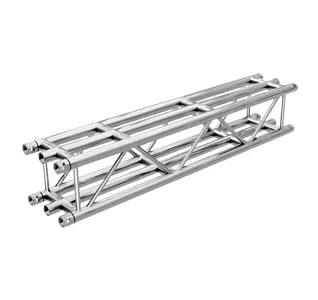
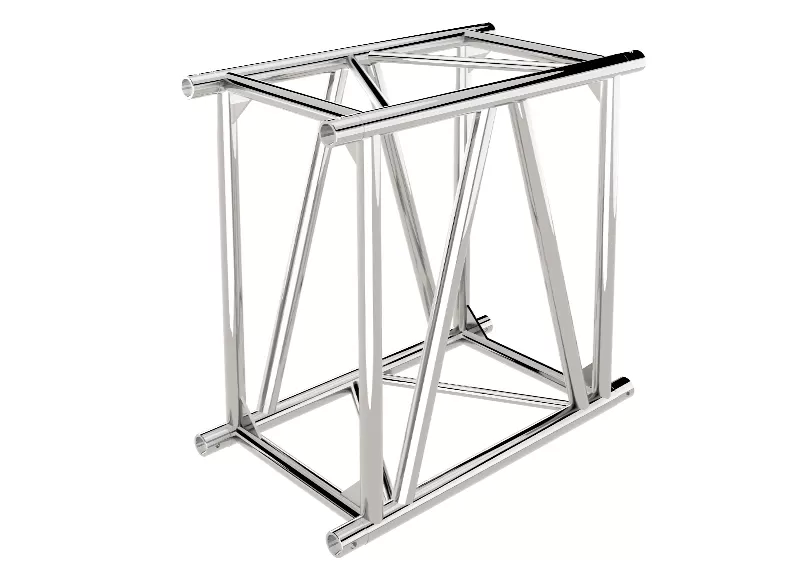
Touring truss is a modular aluminum truss system designed for repeated assembly and disassembly, transport efficiency, and fast on-site deployment across multiple venues. WorldTruss touring truss is manufactured from EN AW-6082 T6 aluminum and is available in natural aluminum finish or powder coated in RAL colors including matte black, supporting both standard and custom finish requirements for touring productions.
Black powder coating is better for stage aesthetics and camera readiness — it reduces stray light reflection under stage lighting, makes the structural rig visually recede in the camera frame, and supports the premium appearance standard that filmed tours and corporate activations require. Natural aluminum is better for simpler cosmetic upkeep and easier structural inspection — there is no coating to chip or peel, and surface defects are more visible during routine inspection. The correct choice depends on the touring cycle, the broadcast requirement, and the appearance standard the production must meet.
For filmed tours and high-end corporate work, yes. The rental rate premium that a premium matte black appearance supports — typically 15 to 20% above natural aluminum — covers the additional maintenance cost of touch-up and periodic recoating within the first two to three touring seasons. The ROI is weakest for high-turnover rental fleets where the coating chips faster than the premium rate can be maintained, and strongest for productions where the appearance standard is a contractual requirement and where show-day complaints about reflections or visual inconsistency generate direct cost.
No structural modification is required, but re-finishing an existing fleet requires disassembly, surface preparation, recoating, and a cure process that is compatible with the EN AW-6082 T6 aluminum specification. The cure temperature must be confirmed against the low-cure guidance for aluminum truss applications to avoid over-aging the material. Connection wear points — spigot interfaces, clamp contact zones, and stacking contact points — should be masked or protected during the recoating process to maintain dimensional accuracy.
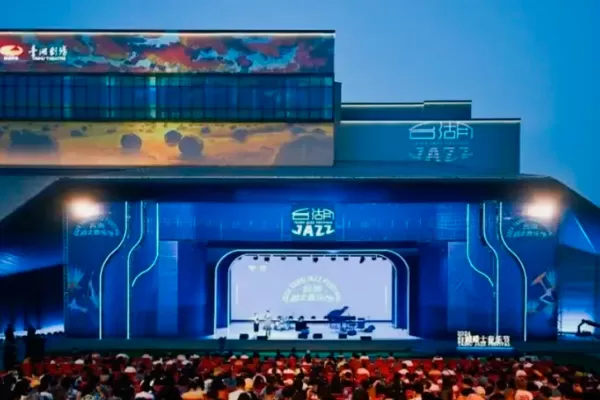 【WTC】2024 Taihu Jazz Festival
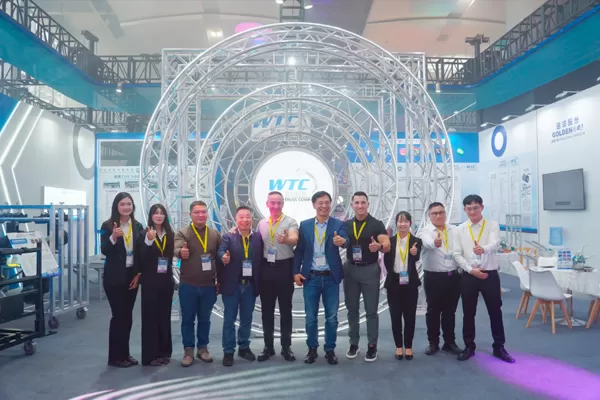 Welcome to Visit Golden Sea at GET Show 2025!
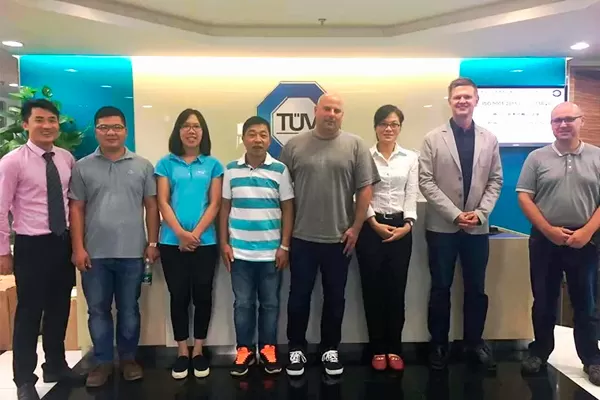 2016 Seminar on How to Improve the Quality of Stage Truss Product
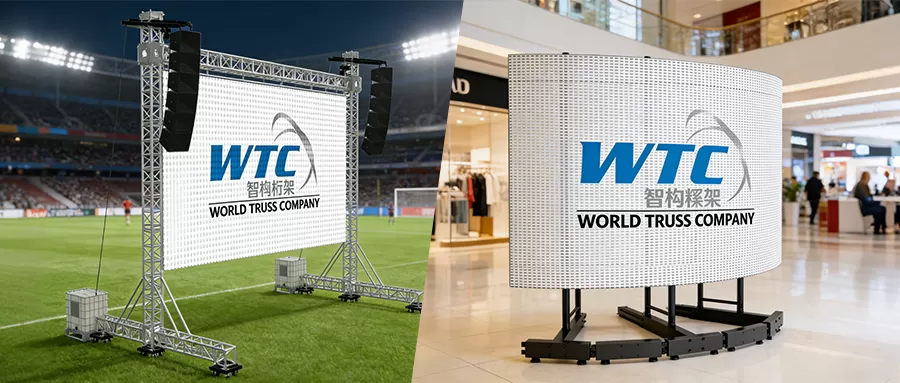 Choose Right Once, No Rework: LED Screen Gantry & Back Frame | Essential Buying Guide
.jpg "Electric Hoist | Labor-Saving Workhorse for Stage Rigging Setup") Electric Hoist | Labor-Saving Workhorse for Stage Rigging Setup
Electric Hoist | Labor-Saving Workhorse for Stage Rigging Setup