-
- EN
-

Some say aluminum trusses are lightweight and premium, while others argue steel trusses are cost-effective and durable. In fact, there is no absolute "better" option — only what fits your application best. Below we break down the differences between the two truss types across 5 core dimensions: load capacity, self-weight, cost, corrosion resistance, and transportation & assembly.
1、Load Capacity: Significant Gap in Heavy-Duty Scenarios
Steel Truss (Q355B):Ideal for heavy-duty long-span applications. All our steel trusses come standard with Q355B low-alloy steel pipes, delivering 40% higher load capacity than ordinary carbon steel trusses. For single spans of 20–40 meters, they can simultaneously support LED video walls, line array speakers, and a full set of stage lighting fixtures — no extra support columns needed to compensate for load limits, ensuring unobstructed stage views and complete presentation effects.
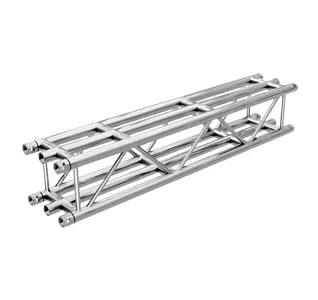
Aluminum Truss (6082-T6):As a high-strength grade in the aluminum alloy family, 6082-T6 trusses in standard sizes can support medium-to-large stage lighting and medium audio equipment, making them the mainstream choice for small-to-medium span events. However, limited by the inherent properties of aluminum alloy, for high-density heavy-duty requirements such as spans over 20 meters, heavy LED video walls, and multiple line array speaker sets, the truss cross-section must be significantly enlarged or intermediate support columns added, leading to higher costs and more site constraints.
2、Self-Weight & Site Requirements: Lighter Is Not Always Better
Steel Truss:With the same specifications, the self-weight of steel trusses is approximately 3 times that of 6082-T6 aluminum trusses, imposing certain requirements on ground load capacity. They are more suitable for sites with sufficient ground conditions, such as outdoor flat ground, ground-floor venues, and stadiums. On the flip side, the greater self-weight brings higher overall rigidity and wind resistance stability. In strong outdoor winds, the sway amplitude is far smaller than that of lightweight aluminum trusses, providing a higher safety margin.
Aluminum Truss:Light weight is its core advantage. With the same specifications, it weighs only about 1/3 of steel trusses, placing almost no stress on ground load capacity. It is almost always the first choice for sites with limited ground load capacity, such as upper-floor exhibition halls, high-rise hotels, and indoor ceiling installations.
3、Overall Cost: Up to 50% Savings for Equivalent Load Capacity
Steel Truss:The cost advantage of steel trusses becomes even more pronounced in heavy-duty projects with spans over 20 meters. No extra support columns or oversized truss upgrades are required, resulting in substantial budget savings for the complete system.
Aluminum Truss:As a high-strength aluminum alloy, its raw material cost is inherently higher than standard aluminum grades, leading to higher unit prices for both purchase and rental. For long-span heavy-duty projects, costs will rise further as oversized truss specifications and additional support columns are required to meet load requirements.
4、Corrosion Resistance & Service Life: Different Solutions for Different Needs
Steel Truss:Carbon steel is inherently prone to rust and requires professional anti-corrosion treatment, but this does not mean a short service life. Our steel trusses adopt a **sandblasting + powder coating** anti-rust process. With regular indoor use and proper maintenance, the service life can reach 8–10 years; for outdoor open-air use with regular touch-up painting, it can last 6–8 years. For long-term fixed outdoor use, a custom hot-dip galvanized version is available with a service life of over 15 years, fully meeting the reuse needs of most projects.
Aluminum Truss:Aluminum is naturally rust-resistant and requires no additional anti-corrosion treatment. It has low wear and tear after long-term repeated use, works both indoors and outdoors, and is hassle-free for daily maintenance.
5、Transportation & Assembly: Lightweight Does Not Equal Higher Efficiency
Steel Truss:Individual sections are heavier, but our beam trusses adopt a single-piece modular segmented design that allows tight stacking on trucks, delivering high loading efficiency for long-haul logistics. This makes them more cost-effective for large projects and long-distance transportation. On-site assembly uses bolt-on connections with no hot work required. Paired with our servo electric cylinder lifting system, there is no need to rent a mobile crane, ensuring high overall assembly efficiency while saving on hoisting costs.
Aluminum Truss:Individual sections are lightweight and easy to handle manually, making them suitable for small projects and short-distance transportation. However, due to their structural design, stacking loading efficiency is low, and volumetric shipping costs are not favorable for large projects with long-distance transportation.
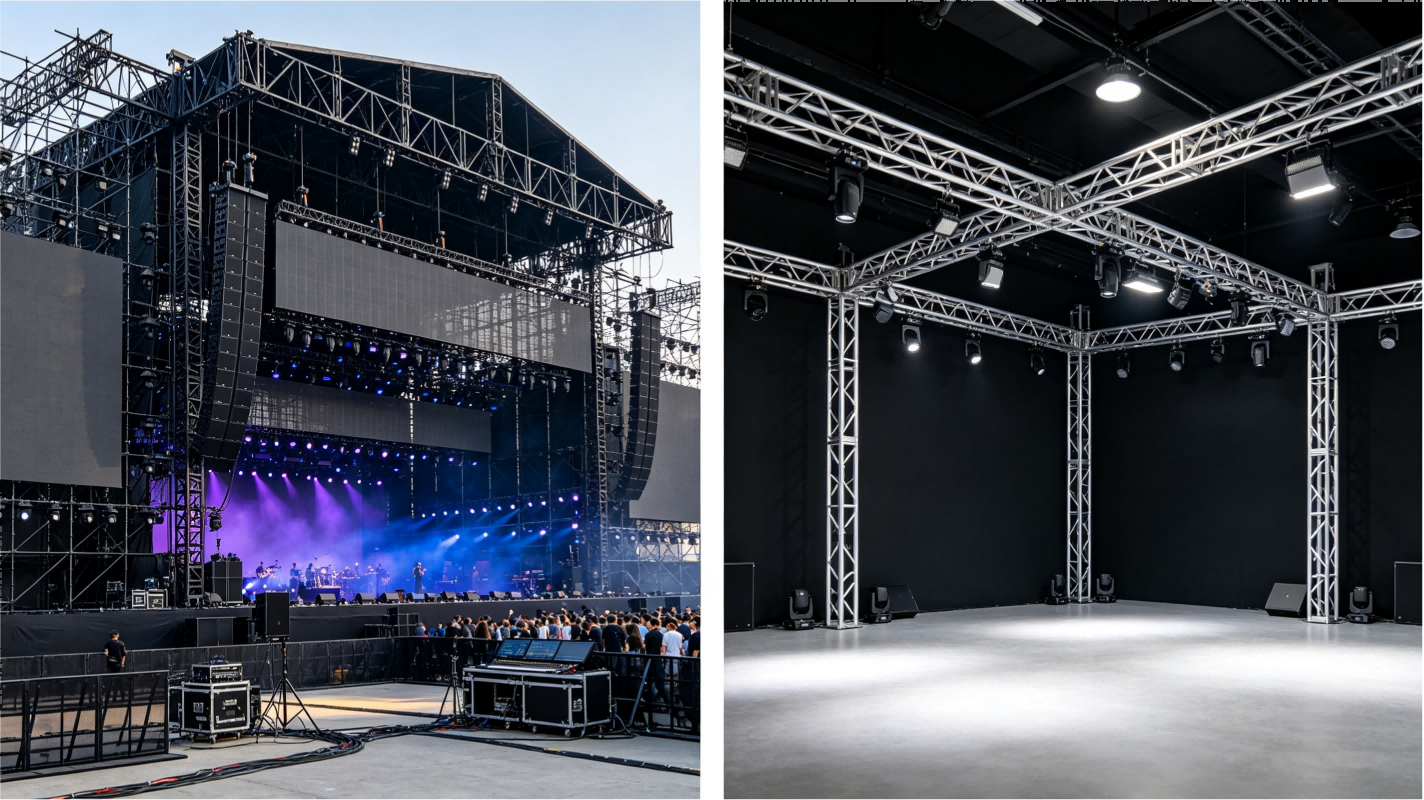
If your project involves small-to-medium spans, upper-floor indoor venues, and mainly light equipment like stage lighting, 6082-T6 aluminum trusses are a suitable choice.
However, for spans over 20 meters, heavy LED video walls / line array speakers, outdoor open-air events, or projects aiming to control overall budget, Q355B steel trusses offer higher cost performance and greater reliability.
 Notice
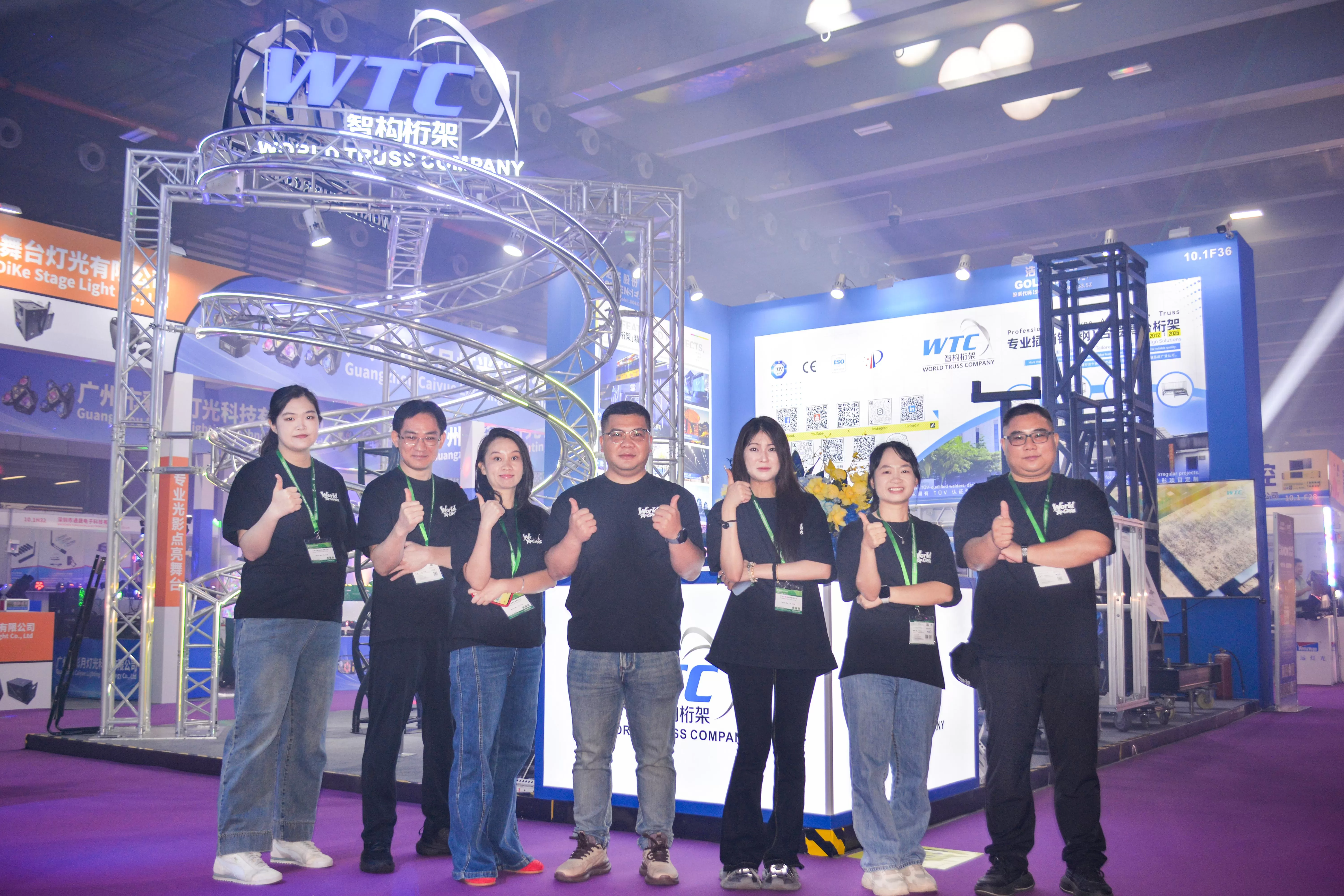 The 2026 Guangzhou International Professional Lighting & Sound Exhibition (PLSG) opens its doors to visitors today
.jpg "Motorized Lifting Truss System Series 2(30 Tonne Standard electric cylinder system)") Motorized Lifting Truss System Series 2(30 Tonne Standard electric cylinder system)
Motorized Lifting Truss System Series 2(30 Tonne Standard electric cylinder system)
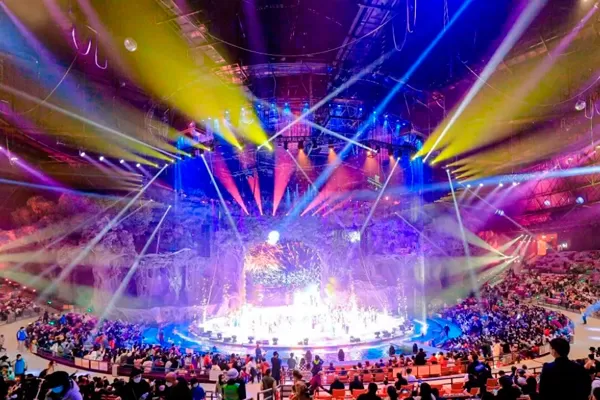 Golden Sea Fixtures Together with Chimelong International Circus Presented a Circus Feast
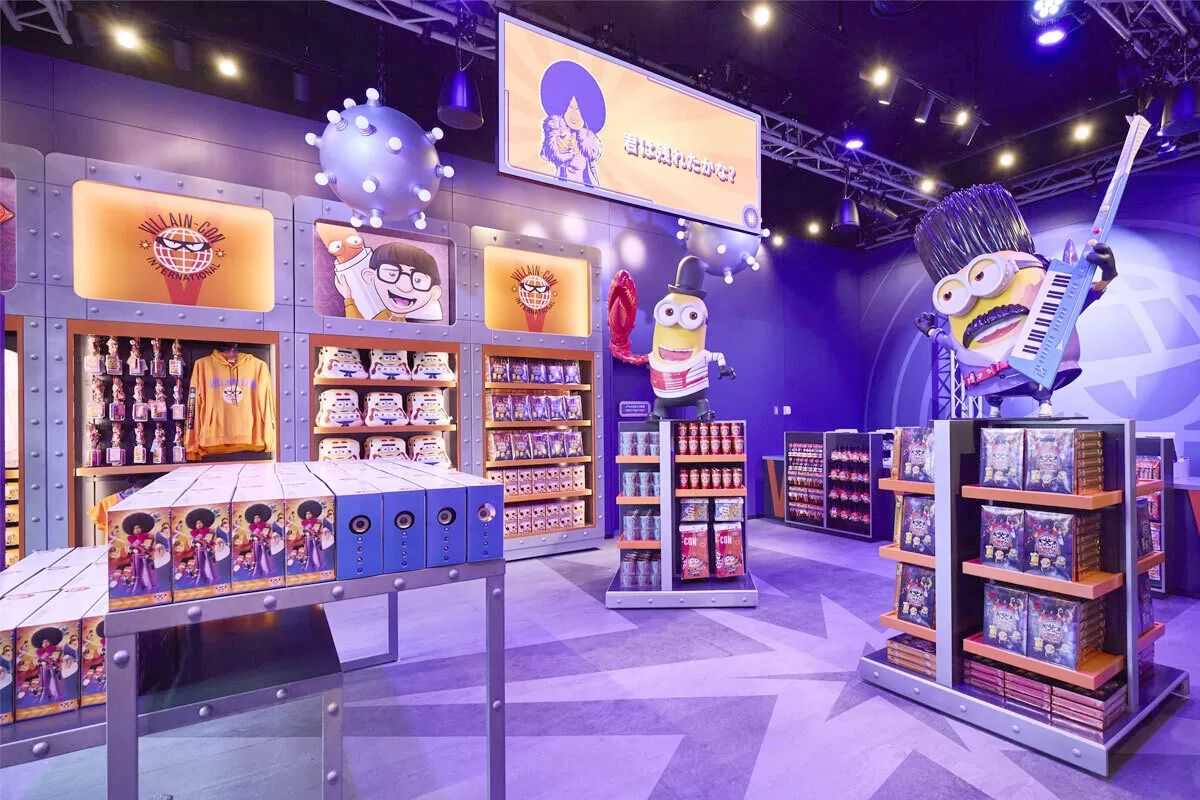 WTC Supports Universal Studios Japan with Advanced Aluminum Truss Systems