-
- EN
-

For rental companies, truss is a profit tool — it must be strong enough for real shows, fast to deploy, easy to transport, and flexible across many event types. In 2026, many rental fleets are expanding their triangle truss inventory because it delivers a practical balance: good load capability for lighting and décor, lower weight for crews, and strong ROI through high utilization. This guide explains where triangle truss fits best, how to evaluate specifications, and what to confirm with a reliable triangle truss maker.
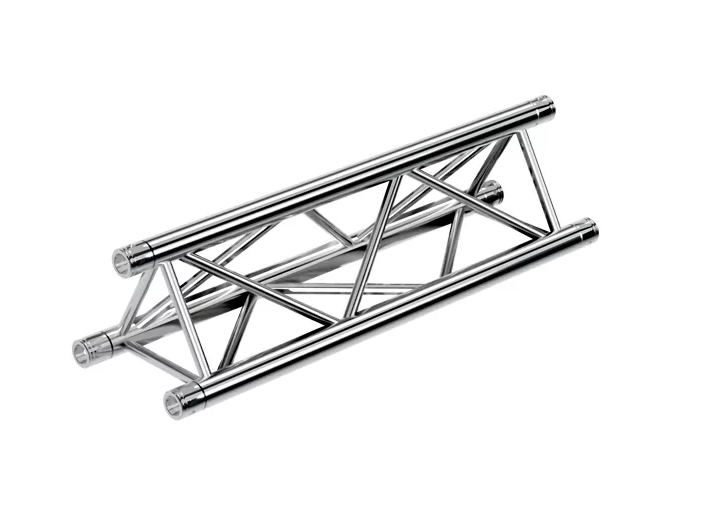
A rental business's profitability is not built on owning the strongest truss — it is built on owning truss that gets used on more jobs, requires less labor to deploy, fits in smaller trucks, and suffers fewer damage events across its service life.
| Rental ROI Factor | Triangle Truss Advantage | Square Truss Alternative |
|---|---|---|
| Setup speed | Lighter weight per section — one or two crew can lift and position | Heavier — typically requires more crew or mechanical assistance |
| Truck pack efficiency | Smaller footprint; fewer cubic meters per running meter | More volume per section |
| Job-type flexibility | Suitable for a wide range of small to medium events | Better for heavy-load events; over-specified for many rentals |
| Damage rate | Fewer sections to handle; less incidental contact damage | More complex handling increases damage risk |
| Utilization frequency | Wide application range means more bookings per year | Higher-spec applications but fewer events need full square truss |
Small to medium stages and performance platforms
DJ booths, corporate event backdrops, and photo walls
Trade show and exhibition display frames
Décor and atmospheric lighting rigs for weddings and private events
Goalpost structures for banner and signage display
Portable PA and effects rigs at club events and touring shows
| Load Category | Typical Fixtures | Triangle Truss Suitability |
|---|---|---|
| Wash and PAR lighting | LED PARs, static wash fixtures | Well-suited — low weight per fixture |
| Moving head lights (light duty) | Compact beam or spot moving heads | Suitable at correct span and with manufacturer load verification |
| Small LED fixtures | LED bars, pixel tubes, small panels | Suitable — confirm total weight and span |
| Atmospheric effects | Haze machines, small CO2 effects, uplighters | Suitable — low weight; typically distributed |
| Banners and fabric | Printed banners, soft drape, event branding | Well-suited — lightweight distributed load |
| Large LED walls | Heavy LED display panels in video wall configuration | Generally not recommended — use square or box truss |
| Heavy audio | Large line array systems, subwoofer clusters | Not appropriate — dedicated audio-rated structures required |
Many events that rental companies service do not require the load capacity of a full touring production rig. A corporate gala with 12 LED PARs and two moving heads on a 6 m goalpost places far less load on the truss than a concert with a 30-fixture heavy rig. Triangle truss is optimized for this common rental scenario — not over-built for an occasional extreme case.
Every triangle truss series has specific load tables based on span and load position. The same truss that safely supports 180 kg distributed over a 6 m span may only safely carry 80 kg as a single point load at mid-span. Always calculate from the load table for your specific configuration — never estimate from a generic rating.
| Construction Element | What to Compare | Effect on Rental Performance |
|---|---|---|
| Main tube outer diameter | 50 mm standard; some series use smaller | Larger tube provides higher section modulus; better bending resistance |
| Main tube wall thickness | 2 mm vs 3 mm | Thicker wall increases resistance to denting from handling; stronger under load |
| Brace tube design | Single brace vs double brace; brace diameter | Well-designed bracing prevents local buckling; maintains torsional stiffness |
| Alloy grade | 6082-T6 or 6061-T6 | Higher yield strength alloy carries more load at same dimensions |
| Weld quality | Full fusion at brace-to-chord joints | Weld quality is where failures initiate; inspect visually |
Spigot and pin connections: the standard for rental triangle truss — fast assembly, standardized pin diameter, compatible with a wide range of clamps and accessories
Pin diameter consistency: confirm the pin diameter is consistent across all sections in the series — a variation of even 1 mm creates loose connections that affect stability
Clamp compatibility: confirm that standard lighting clamps (hook clamps, baby plate) fit the main tube diameter of the truss series you are buying
Accessory compatibility: corners, base plates, sleeve blocks, and extension sections must all come from the same series — mixing sizes or manufacturers creates unpredictable load path behavior
Load tables at multiple span lengths for both distributed and point-load conditions
Material certificates confirming alloy grade
Welding standard compliance documentation
Dimensional tolerance specifications confirming consistent connection geometry across production batches
Available replacement parts list (pins, split pins, spigots)
| Operational Factor | Triangle Truss | Impact on Rental Business |
|---|---|---|
| Section weight | Typically 30–50% lighter than equivalent square truss | One crew member can handle sections without mechanical aids |
| Truck pack | Smaller cross-section; more sections per truck volume | More events per truck run; lower transport cost per job |
| Setup time | Faster assembly with fewer connection points | Lower crew cost per job; more jobs per day possible |
| Storage | Smaller footprint per section; easier to stack and organize | Lower warehouse cost; easier inventory management |
| Crew fatigue | Less physical strain on a multi-day touring run | Lower error rate; lower injury risk |
Cases and carts: purpose-built rolling carts for triangle truss protect sections during warehouse storage and venue transport — they prevent the rolling and impact damage that occurs when sections are stacked loose in a truck
Pin and spigot spare kits: the highest-frequency maintenance need in rental truss is lost or worn connection pins — stock a spare kit for every 20 sections and replace worn pins before they affect connection tightness
End cap protection: plastic or rubber end caps on tube ends prevent the denting that occurs when sections bang against each other in transport — small cost; significant reduction in cosmetic damage
Inspection routine: inspect every section after each event return — check for bent main chords, cracked welds at brace junctions, worn or missing connection hardware, and deformed spigots
A triangle truss section should be retired from service when:
Any main chord tube is visibly bent or kinked
Any weld shows a visible crack
A spigot is deformed and does not fit cleanly into the receiving socket of the adjacent section
The section has been subjected to an incident load (dropped from height; structure collapse)
A well-planned triangle truss inventory allows you to configure multiple different structures from the same pool of sections rather than buying a separate kit for each event type.
| Component | Standard Inventory Recommendation | Usage |
|---|---|---|
| 1 m sections | 30–40% of total linear inventory | Short infill and modular adjustment |
| 2 m sections | 40–50% of total | Primary span building block |
| 3 m sections | 10–20% of total | Long span and runway builds |
| 90° corners | 4 per goalpost or box rig | Box rigs, square frames, and corner adjustments |
| Base plates | Matched to your standard tower/leg system | Ground support for all freestanding structures |
| Extension towers | Matched to the truss series | Height adjustability for different venue ceiling conditions |
Standardize one truss series across the entire fleet — a single series means one clamp size, one pin specification, and one load table to understand
Confirm the series is compatible with the standard lighting clamps (hook clamp and baby plate) your crew and customers use
Confirm accessory compatibility before ordering large quantities — test one full goalpost build with all intended accessories before committing to the full order
| Information | Detail |
|---|---|
| Typical span requirements | Maximum goalpost or box rig span you need to configure |
| Typical fixture payload | Estimated total fixture weight per rig type |
| Preferred finish | Natural aluminum or black powder coat |
| Connection system | Spigot/pin preference and desired pin diameter |
| Quantity | Sections by length, corner count, base plate count |
| Delivery timeline | Required delivery date and destination port |
Triangle truss systems are growing in 2026 rental fleets because they hit the practical sweet spot between capacity and cost — supporting a wide range of real-world events with faster setup, easier transport, and strong utilization rates. The key is choosing the right triangle truss series for your event portfolio and working with a proven triangle truss maker who provides verified load tables, consistent build quality, and reliable accessory compatibility.
Q1: What is triangle truss most commonly used for in event rental?
Triangle truss is the go-to choice for lighting rigs, small to medium stage structures, DJ booths, corporate event backdrops, wedding décor frames, trade show display structures, and goalpost builds for banners and signage. It is particularly valued in rental because its lighter weight allows one or two crew members to handle sections without mechanical assistance, reducing labor cost per job.
Q2: Is triangle truss strong enough for professional events?
Yes, for the majority of events that rental companies service. A properly specified triangle truss series safely supports lighting rigs, atmospheric effects, décor loads, and small audio elements at standard rental spans. The critical requirement is to calculate the load from the manufacturer's load table for the specific span and load type — not from a generic rating. For heavy LED walls, large line arrays, or long-span exhibition builds, square or box truss provides the additional capacity those applications require.
Q3: How do I evaluate the quality of a triangle truss maker?
Request load tables that specify capacity at multiple span lengths for both distributed and point-load conditions. Confirm the material certificate showing alloy grade and temper. Ask about weld procedure qualifications. Confirm dimensional tolerance specifications for consistent connection geometry between sections. Ask for a replacement parts list and confirm availability of pins, spigots, and end caps as regular stock items.
Q4: When should I specify square truss instead of triangle truss for a rental application?
Specify square truss when the application involves heavy LED display walls, large professional audio systems, long-span structures requiring high torsional stiffness, or any installation where the load calculation exceeds the verified capacity of the triangle truss series at the required span. Square truss is also the correct specification for permanent or semi-permanent installations where structural engineering sign-off is required.
Q5: What information should I provide to get an accurate triangle truss quotation?
Provide your standard section lengths and the quantities of each, corner block count, base plate type and quantity, preferred connection system (spigot/pin and preferred pin diameter), finish color (natural aluminum or black powder coat), maximum span requirement, typical total fixture payload per rig, any required accessories, and your delivery destination and required timeline.
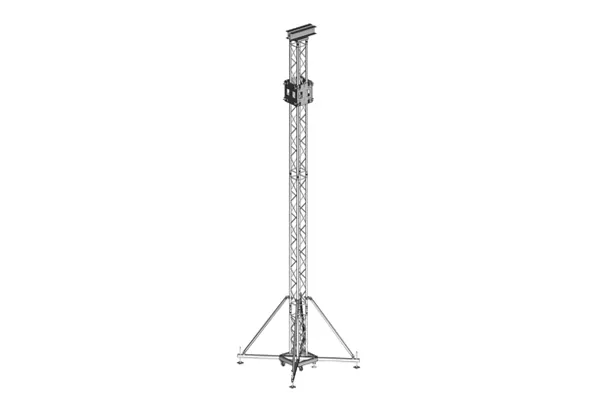 【WTC】TOWERS
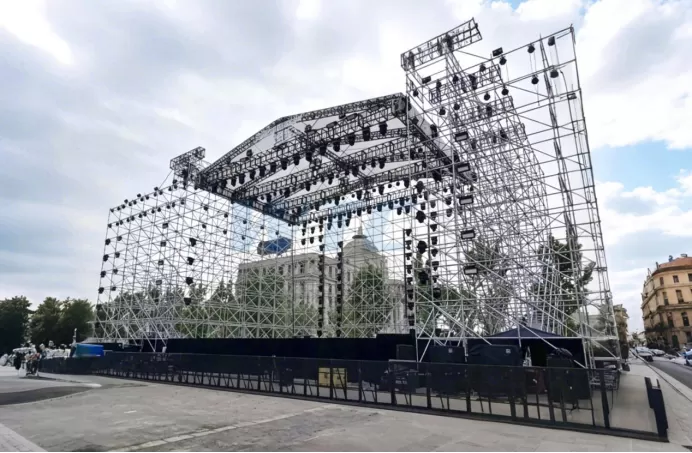 Technical & Safety Compliance Guide for Aluminum Stage Truss Erection
 Golden Sea Fixtures Together with Chimelong International Circus Presented a Circus Feast
 Beam Connector